Stripping the Borders
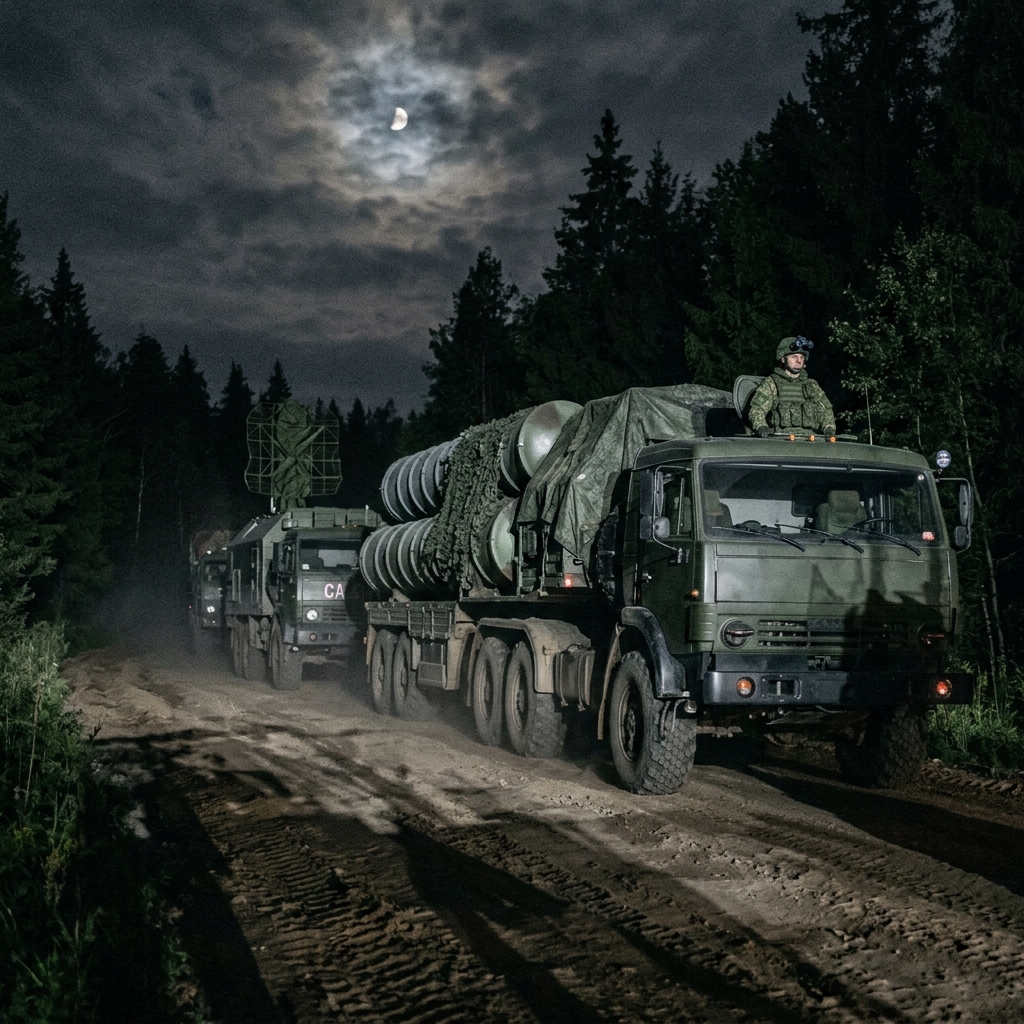
Satellite imagery and ground intelligence have revealed a concerning new pattern in Russian military logistics: the covert relocation of strategic S-400 “Triumf” air defense systems from Russia’s northern and eastern borders deep into the occupied Crimean Peninsula. Convoys of heavy transporter-erector-launchers (TELs) and associated radar vehicles have been tracked moving under the cover of darkness, utilizing civilian road networks to avoid detection. This redeployment indicates a critical shortage of modern air defense assets within the Russian military.
- Multiple S-400 battalions identified moving from the Kaliningrad exclave and the Far East.
- Movements are strictly conducted at night, with vehicles covered in civilian tarpaulins.
- This shift leaves vast stretches of Russia’s borders highly vulnerable to aerial incursions.
The desperation to secure the skies over Crimea highlights the devastating effectiveness of recent Ukrainian missile and drone strikes on the peninsula.
Plugging the Holes in Crimea
The occupied Crimean Peninsula, once considered an impregnable fortress, has seen its air defense umbrella systematically dismantled by Ukrainian forces. Repeated strikes using ATACMS and Storm Shadow missiles have destroyed numerous radar installations, command posts, and missile launchers. To maintain the illusion of control and protect critical logistical hubs like the Kerch Bridge, the Russian Ministry of Defense is forced to cannibalize its strategic reserves, stripping defenses from other geopolitically sensitive regions.
A Vulnerable Convoy
The logistical effort required to move these massive systems thousands of kilometers is fraught with risk. Ukrainian partisans and special operations forces operating behind enemy lines have been actively monitoring these convoys. The heavy reliance on vulnerable rail and road networks creates numerous opportunities for sabotage. Furthermore, while in transit, the S-400 systems are non-operational, making them highly susceptible to long-range precision strikes before they even reach their new deployment zones.
Strategic Implications for NATO
The withdrawal of S-400 systems from regions bordering NATO member states, particularly Kaliningrad, alters the strategic balance in Eastern Europe. It demonstrates that the Russian military is severely overextended and incapable of fighting a multi-front war while simultaneously maintaining a robust domestic defense posture. Military analysts suggest this vulnerability could encourage bolder intelligence-gathering operations by allied nations along Russia’s newly exposed frontiers.
| Origin Region | Estimated Units Moved | Current Status |
|---|---|---|
| Kaliningrad Exclave | 2 Battalions | Deployed in Northern Crimea |
| St. Petersburg Sector | 1 Battalion | In Transit (Spotted near Rostov) |
| Eastern Military District | 1 Battalion | Arrived in Sevastopol area |
| Strategic Reserve | Depleted | Insufficient to cover current losses |