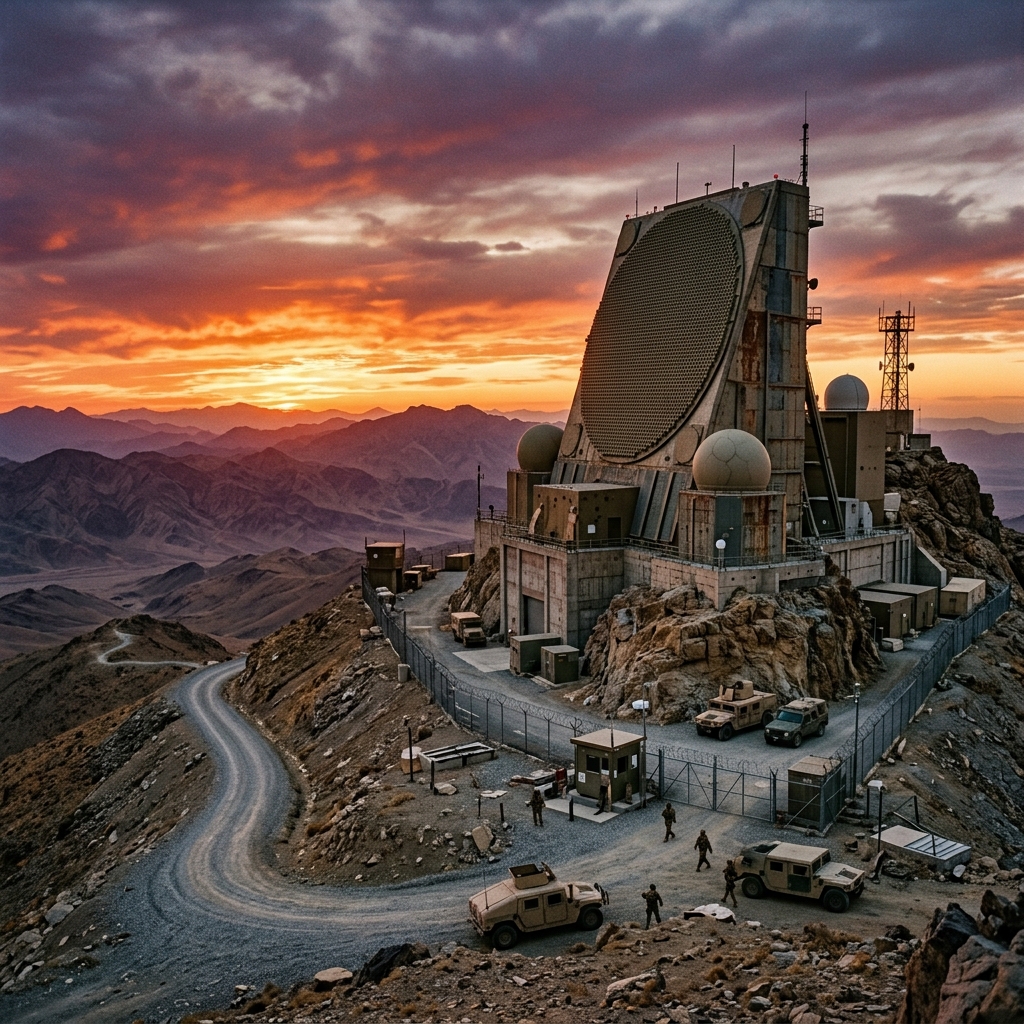
Deployment of Next-Generation Radar
In a major boost to national air defense capabilities, a series of next-generation early warning radar systems has been activated along the border. These massive installations are designed to detect and track high-speed, low-observable threats such as hypersonic missiles and stealth aircraft at unprecedented ranges.
Active Electronically Scanned Arrays (AESA)
At the heart of these new stations is advanced Active Electronically Scanned Array (AESA) technology. Unlike traditional rotating dishes, AESA radars use thousands of small, solid-state transmitting and receiving modules to steer radar beams electronically. This allows them to track thousands of targets simultaneously without mechanical movement.
Integration with Interceptor Networks
The data gathered by these early warning sites is fed directly into a centralized, AI-driven command network. This integration drastically reduces the ‘sensor-to-shooter’ timeline, automatically calculating interception trajectories and cueing appropriate ground-based missile defense batteries before the threat reaches its target.
Countering Hypersonic Threats
The primary motivation behind this costly infrastructure upgrade is the proliferation of hypersonic weapons among adversarial nations. The new radar systems possess the high processing power and sensitivity required to detect the faint plasma signatures generated by vehicles traveling at Mach 5 and above.
| Feature | Traditional Radar | Next-Gen AESA Radar |
|---|---|---|
| Beam Steering | Mechanical rotation | Electronic, near-instantaneous |
| Target Tracking | Hundreds of targets | Thousands of simultaneous targets |
| Maintenance | High mechanical wear | Solid-state, high reliability |
| Jamming Resistance | Vulnerable to broad jamming | Highly resistant, frequency hopping |