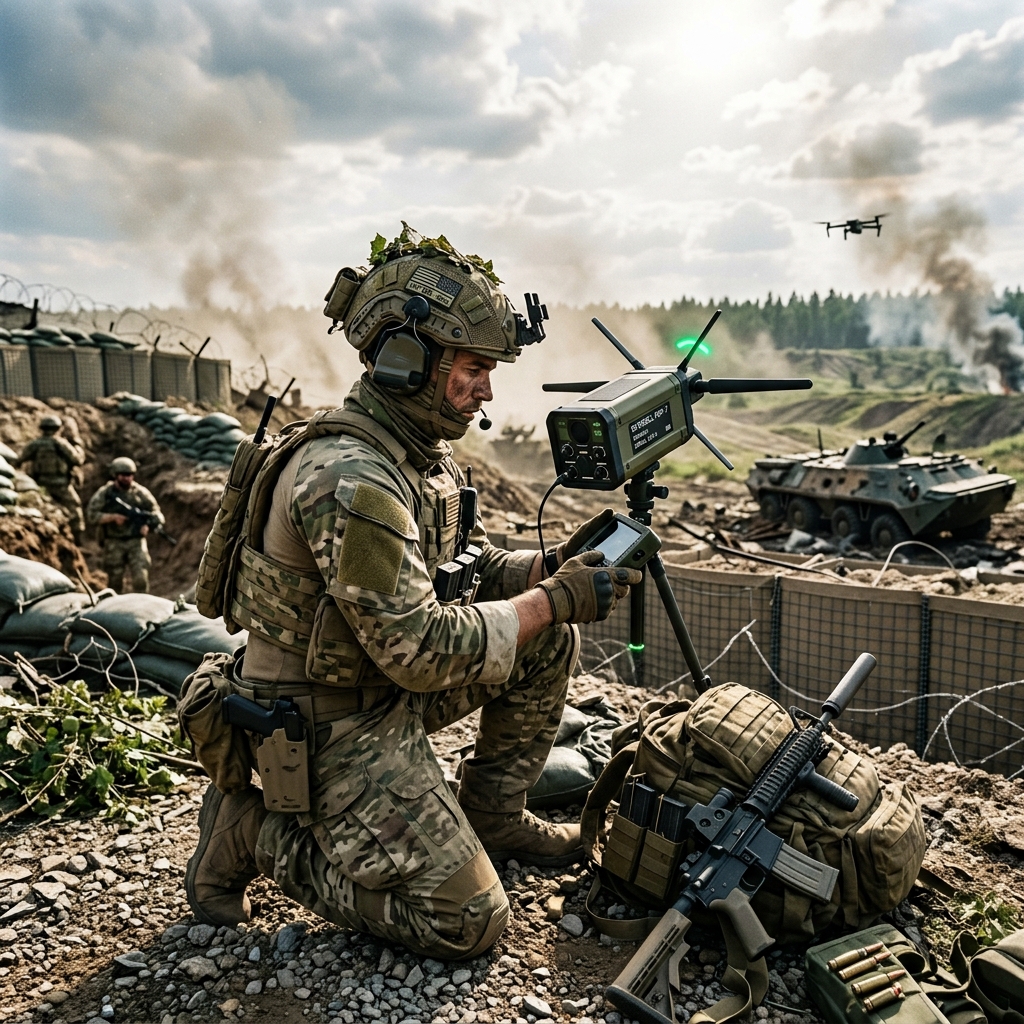
Introduction of Portable Drone Interceptors
In response to the growing threat of small, low-flying unmanned aerial vehicles (UAVs) on the battlefield, the military has officially deployed a new generation of portable drone interceptor technologies to the frontline. These compact devices are designed to empower infantry units with immediate counter-drone capabilities without relying on heavy air defense systems.
Operational Mechanisms and Features
The new interceptors utilize a combination of directed electromagnetic pulses and localized signal jamming to sever the connection between the hostile drone and its operator. Some variants also deploy kinetic nets to physically entangle drones flying at close ranges, neutralizing kamikaze drones before they can reach their targets.
Impact on Infantry Tactics
This deployment represents a paradigm shift in infantry tactics. Previously, soldiers were highly vulnerable to aerial reconnaissance and targeted strikes from commercial drones adapted for military use. With these portable interceptors, squads can now secure their airspace locally, allowing for safer movement and more effective offensive operations.
Looking Forward: The Drone Arms Race
While these new interceptors provide a critical tactical advantage, experts warn that the drone arms race is far from over. Adversaries are already developing autonomous drones that do not rely on constant radio communication, which will require the next generation of interceptors to incorporate advanced AI and optical tracking to remain effective.
| Interceptor Type | Mechanism | Effective Range |
|---|---|---|
| EMP Rifle | Directed electromagnetic pulse | Up to 500 meters |
| Signal Jammer | Radio frequency interference | Up to 1.5 kilometers |
| Kinetic Net Gun | Physical entanglement | Up to 100 meters |
| Laser Dazzler | Optical sensor blinding | Up to 1 kilometer |