Context
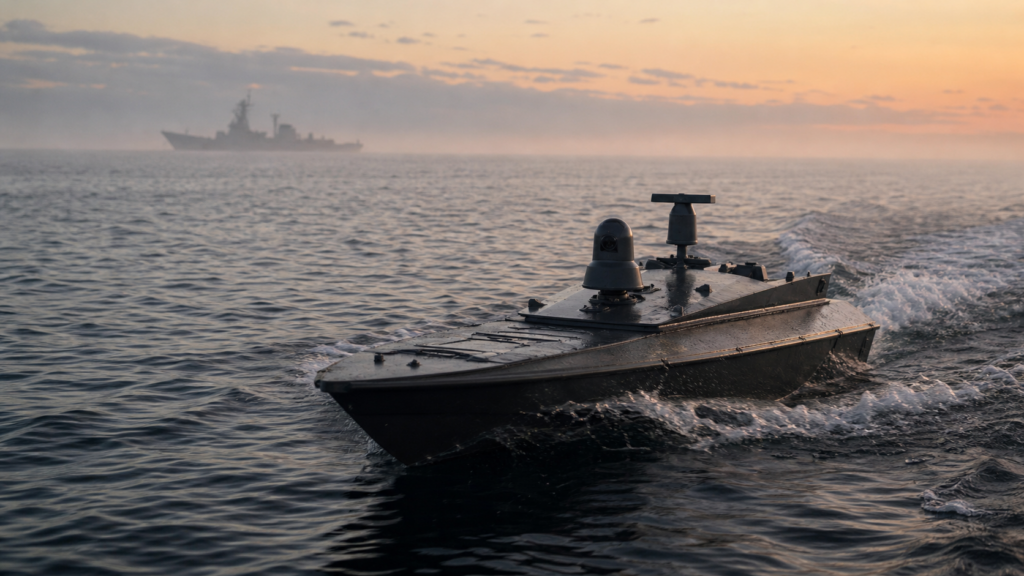
The war in the Black Sea has shown that a navy no longer needs a large fleet to contest control of water. Ukraine’s unmanned surface vessels have pushed the idea of naval power into a new phase: small, cheaper, networked craft can scout, strike, distract and force expensive ships to move farther from danger.
Pressure
This does not mean warships disappear tomorrow. Large vessels still carry air defense, helicopters, command systems and endurance that drones cannot replace. But the balance of risk has changed. A ship worth hundreds of millions can be threatened by a swarm of unmanned boats whose cost is tiny by comparison.
Military impact
The key is not only the hull. Naval drones matter because they combine sensors, satellite links, autonomy, explosive payloads and fast iteration. Each failed mission teaches designers something, and each update can spread across the fleet quickly. That software-like learning cycle is difficult for traditional shipbuilding to match.
What comes next
Future navies will likely mix large ships with many expendable or reusable unmanned systems. The ship becomes a command node, logistics base and air-defense umbrella, while drones take the riskiest approaches. The Black Sea lesson is clear: sea control is no longer only about tonnage. It is about networks, cost and speed of adaptation.
| Mission | Drone effect |
|---|---|
| Reconnaissance | Persistent scouting without risking crews |
| Strike | Low-cost pressure on high-value ships |
| Decoy and saturation | Forces defenses to spend missiles and attention |