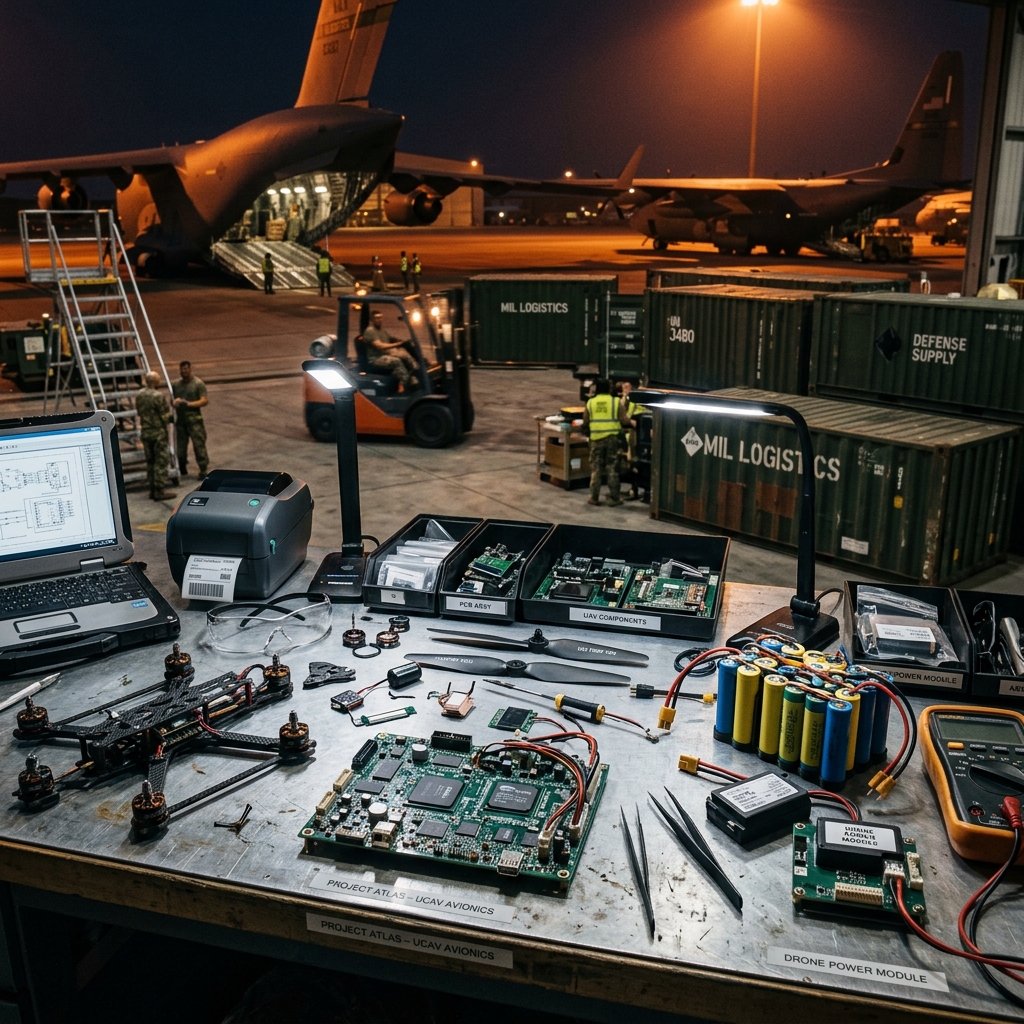
The Global Supply Chain Bottleneck
The escalation of hostilities in the Middle East has triggered a major logistical crisis that directly affects Ukraine’s defense-industrial complex. The disruption of shipping lanes in the Red Sea due to Houthi militant attacks, combined with heightened tensions in the Persian Gulf, has forced international shipping companies to reroute vessels. This change has severely impacted the delivery of critical raw materials and electronics. Ukrainian military technology companies rely heavily on Asian markets for essential drone components, including lithium-ion batteries, battery management systems (BMS), electric motors, and specialized microchips. With the Suez Canal transit compromised, shipping companies must navigate around the Cape of Good Hope, adding significant delays to delivery times.
This detour has not only lengthened supply transit times by ten to twenty days but has also caused shipping costs to skyrocket. Shipping rates and insurance premiums for cargo passing through near-conflict zones have increased dramatically, directly raising the cost of production for Ukrainian defense manufacturers. Because European alternatives for many of these components do not exist at the required scale, Ukrainian enterprises face a difficult choice: accept longer lead times and higher costs, or risk production stoppages. This logistical bottleneck highlights the vulnerability of modern military supply chains to localized geopolitical conflicts, requiring immediate adaptation from defense planners.
The Battle for Western Defense Resources
Beyond logistics, the conflict in the Middle East has created intense competition for Western military resources and production capacity. The United States and its European allies are now forced to balance their support between multiple active theaters. Israel’s immediate need for air defense interceptors, artillery ammunition, and precision-guided weapons directly overlaps with the requirements of the Ukrainian Armed Forces. Systems like the MIM-104 Patriot and NASAMS are in high demand in both regions, putting a strain on existing stockpiles. Consequently, Western partners must make difficult decisions regarding the allocation of interceptor missiles, potentially slowing down deliveries of air defense systems to Ukraine at a time of increased Russian missile attacks.
Furthermore, the defense industrial base in NATO countries is struggling to meet the sudden surge in global demand. Production lines for 155mm artillery shells and guided missiles were already operating at maximum capacity. The addition of a second high-intensity conflict in the Middle East has created bottlenecks in raw materials, explosives, and specialized machinery. While Western nations are investing in expanding their manufacturing capacity, these expansion projects require years to become fully operational, leaving Ukraine to manage immediate ammunition shortages in the interim.
Geopolitical Focus and Strategic Shift
The shifting of international diplomatic and media attention from Eastern Europe to the Middle East represents a significant strategic challenge for Ukraine. With global leaders focused on preventing a wider regional war in the Middle East, the diplomatic urgency surrounding the conflict in Ukraine has decreased. This shift has resulted in legislative delays in partner nations regarding financial aid packages and military assistance approvals. The prolonged debates in the US Congress and the European Union highlight the difficulty of maintaining long-term financial commitments to Ukraine when new crises emerge, potentially weakening the coalition supporting Kyiv.
The conflict has also had a direct economic impact by causing instability in global energy markets. Tensions in the Persian Gulf have driven up global oil prices, which directly benefits the Russian federation. Increased oil revenues allow Moscow to fund its military-industrial expansion, offsetting the impact of Western sanctions. Consequently, the geopolitical instability in the Middle East indirectly strengthens Russia’s economic position, making it more difficult for Ukraine and its partners to achieve a decisive breakthrough on the battlefield.
Ukraine's Adaptive Response and Self-Sufficiency
In response to these supply chain vulnerabilities and resource constraints, Ukraine is accelerating its efforts to achieve defense self-sufficiency. A major focus is being placed on expanding domestic production of unmanned systems. Currently, over ninety-five percent of the drones utilized by the Ukrainian Armed Forces are manufactured locally, reducing the dependency on finished foreign imports. Ukrainian firms are also working to establish domestic assembly lines for batteries and motors, aiming to mitigate the impact of international shipping delays. Additionally, the government is supporting initiatives like Brave1, which fast-tracks military innovations from concept to battlefield deployment.
To bypass raw material shortages and acquire advanced technologies, Ukrainian defense companies are forming joint ventures with European manufacturers. Partnerships with companies like Rheinmetall and Escribano allow for the localized production of armored vehicles and air defense systems within Ukraine. By manufacturing ammunition and servicing weapons locally, Ukraine reduces its reliance on long-distance logistics and ensures a more responsive supply chain. While complete independence from foreign aid is not immediately achievable, these adaptations are building a more resilient defense infrastructure capable of surviving global logistical disruptions.
| Logistics / Resource Category | Status Before Middle East Escalation | Status Post-Middle East Escalation |
|---|---|---|
| Suez Canal Transit Routes | Standard shipping times (15-25 days) | Rerouted via Cape of Good Hope (+10-20 days) |
| Freight & Insurance Costs | Baseline rates for standard cargo | 3x to 4x cost increase due to war risk premiums |
| Air Defense Allocation | Primary focus on Ukrainian requirements | Shared priority between Ukraine and Middle East |
| Global Oil Prices | Relatively stable within baseline range | Higher prices, increasing Russian export revenues |
| Local Drone Production | Significant import reliance for electronics | 95% local assembly, rising domestic parts sourcing |