The test
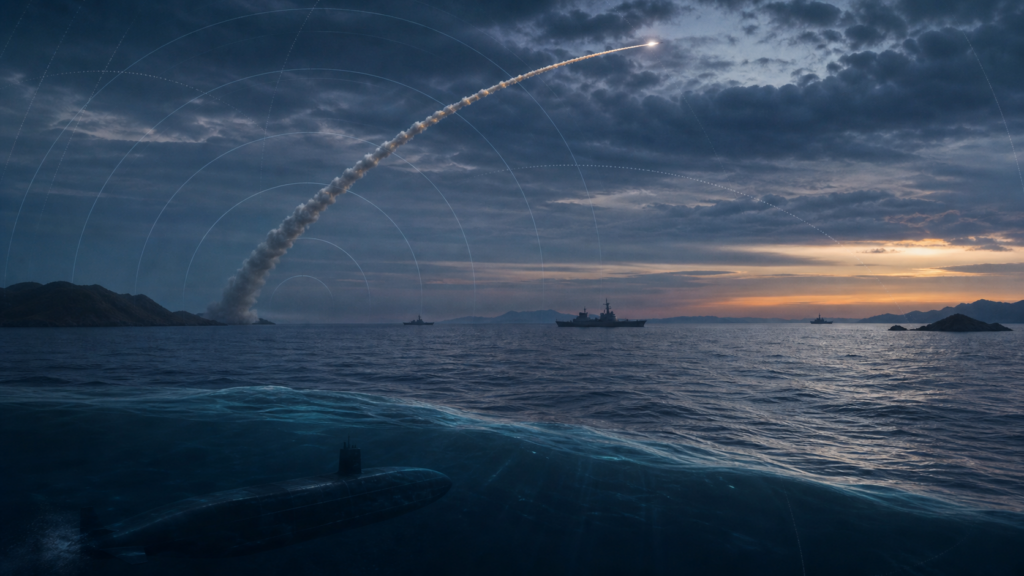
China test-launched a long-range ballistic missile from a nuclear-powered submarine into the South Pacific, AP reported. Beijing described the launch as routine training with advance notification, but regional governments criticized the transparency and strategic message.
Why the Pacific reacted
The South Pacific is sensitive because nuclear-free norms and small-state security expectations shape regional diplomacy. Even a dummy warhead test can feel destabilizing when the missile path and notification window are viewed as insufficient.
The submarine signal
The submarine element matters. Sea-based missiles are central to a survivable nuclear deterrent because submarines are harder to track than fixed launch sites. A visible test therefore signals not only a missile capability but confidence in undersea operations.
Strategic impact
For the U.S., Australia, Japan and Pacific states, the launch adds urgency to arms-control dialogue and regional warning mechanisms. For China, it demonstrates reach. The risk is a cycle in which each demonstration pushes others toward more surveillance, patrols and countermeasures.
| Factor | Security meaning |
|---|---|
| Submarine launch | Signals survivable deterrence |
| Pacific location | Raises regional notification concerns |
| Arms-control gap | Increases pressure for dialogue |