The Cold War and the Birth of the Gepard
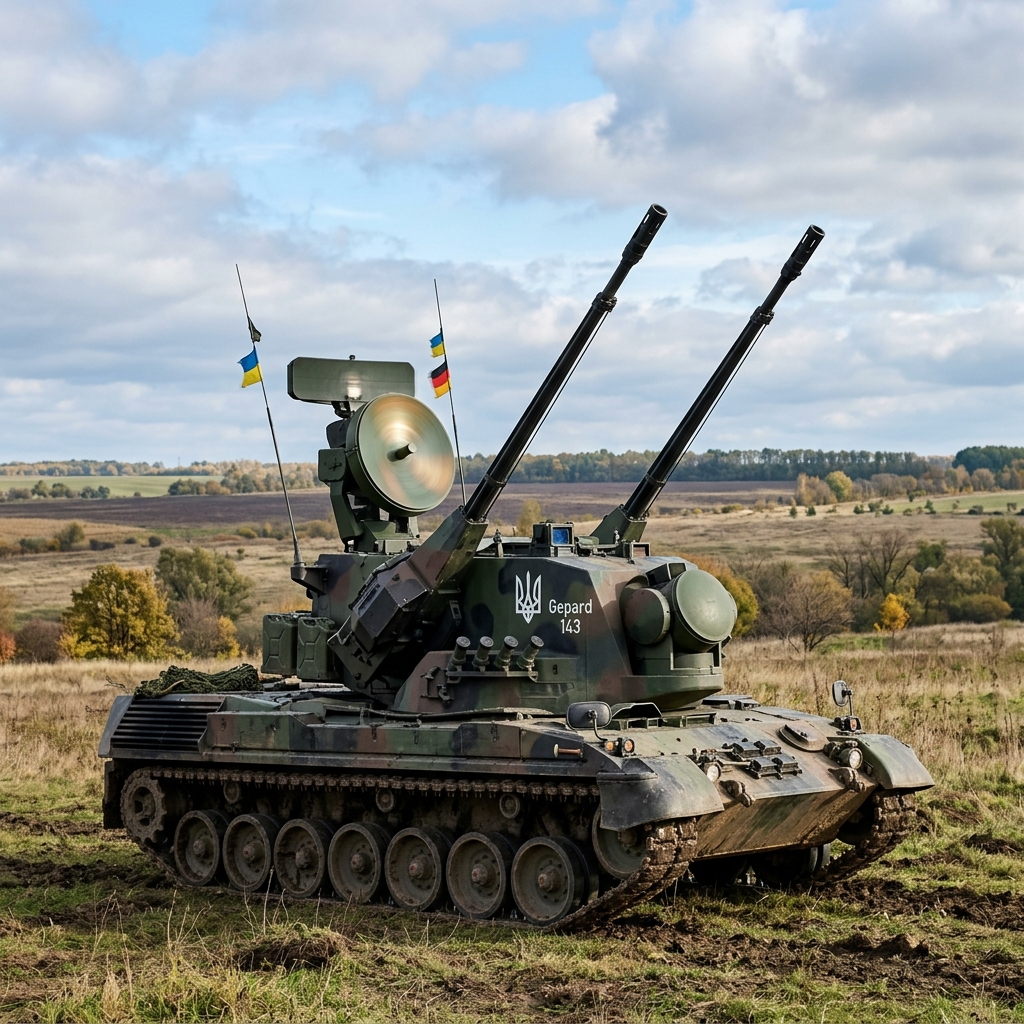
At the height of the Cold War, when the threat of a sudden strike by Soviet ground-attack aviation was at its peak, West Germany initiated the development of a highly mobile air defense system. The result of these efforts was the Flakpanzer Gepard, introduced in the 1970s. This self-propelled anti-aircraft gun (SPAAG) was built on the Leopard 1 tank chassis and equipped with twin 35mm Oerlikon autocannons. The system’s primary advantage was the integration of two independent radars: a search radar and a tracking radar.
The Gepard was designed to provide highly mobile, close-in protection for armored divisions against low-flying helicopters and jets. Its radars could detect targets up to 15 kilometers away, while a computerized fire control system automatically calculated lead angles for high-precision targeting. At the time, it represented the pinnacle of Bundeswehr engineering, ensuring the survival of ground forces on the tactical battlefield.
The Era of "Scrap Metal" and Decommissioning
With the collapse of the Soviet Union and the subsequent shift in NATO military doctrines, the role of the Gepard was rapidly sidelined. Military strategists believed that the era of conventional anti-aircraft artillery had passed, yielding to surface-to-air missile systems. Furthermore, maintaining heavy armored vehicles based on the Leopard 1 chassis required significant financial resources, which European nations sought to cut during the era of the “peace dividend.”
By the late 2000s, Germany had completely phased out the Gepard from active service, sending hundreds of units to storage depots. Some systems were sold to other nations, including Jordan, Brazil, and Romania, but most sat in open-air yards at Krauss-Maffei Wegmann (KMW) facilities, awaiting scrap yards. Many dismissed these machines as obsolete relic armor with no future in modern conflicts dominated by precision standoff missiles.
Tactical Renaissance in Ukrainian Skies
Everything changed in the autumn of 2022 when Russia began deploying Iranian-made Shahed-136 kamikaze drones en masse to destroy Ukrainian energy infrastructure. Utilizing expensive interceptor missiles from systems like Patriot or NASAMS against cheap loitering munitions proved economically unsustainable. It was then that the first German-supplied Gepards arrived in Ukraine and demonstrated phenomenal intercept efficiency as “Shahed hunters.”
Equipped with its own tracking systems, the Gepard is capable of independently detecting, tracking, and engaging aerial targets in complete darkness or thick fog. The combination of precision fire control and a high rate of fire (1,100 rounds per minute) allows it to neutralize drones with just a few short bursts. The once-decommissioned tank has become a critical node of mobile air defense units protecting Ukrainian cities.
Economic Warfare and the Future of Gun-Based Air Defense
The defining success factor for the Gepard in Ukraine is the intercept cost-efficiency ratio. Firing a short burst of 35mm ammunition costs a few thousand dollars, compared to interceptor missiles priced from hundreds of thousands to millions. This establishes a sustainable economic parity in a war of attrition. Furthermore, the Gepard’s performance has prompted global defense forces to re-evaluate anti-aircraft guns, leading to the development of systems like Rheinmetall’s Skynex.
Today, the Gepard is more than just a weapon system; it is a symbol of cost-effective air defense strategy. Its operational history proves that even decommissioned hardware from a previous generation can undergo a strategic revival and play a decisive role in contemporary technological warfare when deployed effectively against modern asymmetric threats.
| Parameter | Value |
|---|---|
| Gun Caliber | 35 mm (Oerlikon KDA) |
| Rate of Fire | 1,100 rounds/min (combined) |
| Radar Detection Range | Up to 15 km |
| Target Engagement Range | Up to 4 km |
| Effective Altitude | Up to 3 km |
| Base Chassis | Leopard 1 |