Why the Pas-de-Calais story was believable
Operation Fortitude was the Allied deception plan designed to mislead German leaders about the location and timing of the 1944 invasion of north-west Europe. It was not a single trick involving inflatable tanks or false radio traffic. It was a coordinated intelligence and communications campaign that used double agents, dummy equipment, fake formations, controlled leaks, and carefully managed signals. Its central objective was to persuade Germany that the main invasion would come at the Pas-de-Calais rather than Normandy and to keep German forces focused there after D-Day. The operation is historically important because it shows that deception succeeds only when it fits what the target already considers plausible. Allied planners had to build a believable story around geography, logistics, command personalities, and German expectations. They also had to coordinate deception with a real military operation whose scale was unprecedented.
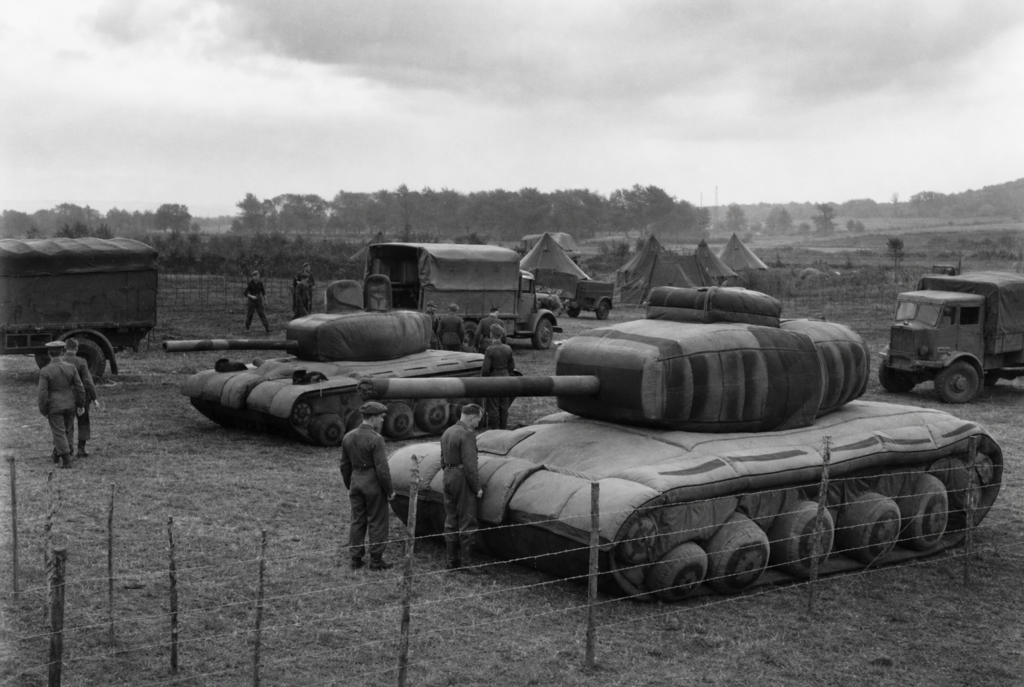
The Pas-de-Calais was the shortest crossing point between Britain and France, making it an obvious candidate for an invasion in German planning. Allied deception exploited that expectation. The fictional First United States Army Group, associated with General George S. Patton, appeared to be assembling in south-east England. Patton’s reputation as an aggressive commander made the story more credible to German analysts. Dummy camps, vehicles, landing craft, and controlled radio traffic supported the impression of a large force preparing for Calais. Yet physical props were only part of the picture. The story had to be consistent across reports, logistics, and intercepted communications. Deception planners understood that an enemy does not need to believe every detail. It needs to believe enough of the central narrative to allocate forces incorrectly. Fortitude aimed to shape that allocation at the moment when German reserves could have been decisive in Normandy.
Operation Fortitude was the Allied deception plan designed to mislead German leaders about the location and timing of the 1944 invasion of north-west Europe. It was not a single trick involving inflatable tanks or false radio traffic. It was a coordinated intelligence and communications campaign that used double agents, dummy equipment, fake formations, controlled leaks, and carefully managed signals. Its central objective was to persuade Germany that the main invasion would come at the Pas-de-Calais rather than Normandy and to keep German forces focused there after D-Day. The operation is historically important because it shows that deception succeeds only when it fits what the target already considers plausible. Allied planners had to build a believable story around geography, logistics, command personalities, and German expectations. They also had to coordinate deception with a real military operation whose scale was unprecedented.
The Pas-de-Calais was the shortest crossing point between Britain and France, making it an obvious candidate for an invasion in German planning. Allied deception exploited that expectation. The fictional First United States Army Group, associated with General George S. Patton, appeared to be assembling in south-east England. Patton’s reputation as an aggressive commander made the story more credible to German analysts. Dummy camps, vehicles, landing craft, and controlled radio traffic supported the impression of a large force preparing for Calais. Yet physical props were only part of the picture. The story had to be consistent across reports, logistics, and intercepted communications. Deception planners understood that an enemy does not need to believe every detail. It needs to believe enough of the central narrative to allocate forces incorrectly. Fortitude aimed to shape that allocation at the moment when German reserves could have been decisive in Normandy.
Operation Fortitude was the Allied deception plan designed to mislead German leaders about the location and timing of the 1944 invasion of north-west Europe. It was not a single trick involving inflatable tanks or false radio traffic. It was a coordinated intelligence and communications campaign that used double agents, dummy equipment, fake formations, controlled leaks, and carefully managed signals. Its central objective was to persuade Germany that the main invasion would come at the Pas-de-Calais rather than Normandy and to keep German forces focused there after D-Day. The operation is historically important because it shows that deception succeeds only when it fits what the target already considers plausible. Allied planners had to build a believable story around geography, logistics, command personalities, and German expectations. They also had to coordinate deception with a real military operation whose scale was unprecedented.
The Pas-de-Calais was the shortest crossing point between Britain and France, making it an obvious candidate for an invasion in German planning. Allied deception exploited that expectation. The fictional First United States Army Group, associated with General George S. Patton, appeared to be assembling in south-east England. Patton’s reputation as an aggressive commander made the story more credible to German analysts. Dummy camps, vehicles, landing craft, and controlled radio traffic supported the impression of a large force preparing for Calais. Yet physical props were only part of the picture. The story had to be consistent across reports, logistics, and intercepted communications. Deception planners understood that an enemy does not need to believe every detail. It needs to believe enough of the central narrative to allocate forces incorrectly. Fortitude aimed to shape that allocation at the moment when German reserves could have been decisive in Normandy.
| Mechanism | Purpose | Effect on German assessment |
|---|---|---|
| FUSAG fiction | Portray an invasion army | Makes a Calais assault appear likely |
| Double agents | Transmit controlled reports | Adds human-source credibility |
| Dummy equipment | Support visual plausibility | Reinforces a false concentration |
| False radio traffic | Simulate formations | Creates communications signatures |
| Post-D-Day persistence | Keep the story alive | Encourages retention of Calais reserves |
Double agents and the controlled flow of information
Operation Fortitude was the Allied deception plan designed to mislead German leaders about the location and timing of the 1944 invasion of north-west Europe. It was not a single trick involving inflatable tanks or false radio traffic. It was a coordinated intelligence and communications campaign that used double agents, dummy equipment, fake formations, controlled leaks, and carefully managed signals. Its central objective was to persuade Germany that the main invasion would come at the Pas-de-Calais rather than Normandy and to keep German forces focused there after D-Day. The operation is historically important because it shows that deception succeeds only when it fits what the target already considers plausible. Allied planners had to build a believable story around geography, logistics, command personalities, and German expectations. They also had to coordinate deception with a real military operation whose scale was unprecedented.
The double-agent system run by British intelligence was crucial because it gave German services information that appeared to come from trusted human sources. Agents such as Juan Pujol García, codenamed Garbo, sent reports that mixed accurate minor detail with carefully directed deception. Their credibility had to be protected: reports could not be so perfect that they looked invented, and some warnings had to arrive too late to be useful. This illustrates the ethical and operational difficulty of intelligence deception. A source is valuable only if the opponent continues to trust it. British handlers, military planners, and communications specialists therefore coordinated messages with extraordinary care. The value of these reports was amplified when they reinforced aerial reconnaissance, fake radio networks, and German assumptions. Fortitude was not simply lying; it was managing the evidence environment through which an adversary made decisions.
Operation Fortitude was the Allied deception plan designed to mislead German leaders about the location and timing of the 1944 invasion of north-west Europe. It was not a single trick involving inflatable tanks or false radio traffic. It was a coordinated intelligence and communications campaign that used double agents, dummy equipment, fake formations, controlled leaks, and carefully managed signals. Its central objective was to persuade Germany that the main invasion would come at the Pas-de-Calais rather than Normandy and to keep German forces focused there after D-Day. The operation is historically important because it shows that deception succeeds only when it fits what the target already considers plausible. Allied planners had to build a believable story around geography, logistics, command personalities, and German expectations. They also had to coordinate deception with a real military operation whose scale was unprecedented.
The double-agent system run by British intelligence was crucial because it gave German services information that appeared to come from trusted human sources. Agents such as Juan Pujol García, codenamed Garbo, sent reports that mixed accurate minor detail with carefully directed deception. Their credibility had to be protected: reports could not be so perfect that they looked invented, and some warnings had to arrive too late to be useful. This illustrates the ethical and operational difficulty of intelligence deception. A source is valuable only if the opponent continues to trust it. British handlers, military planners, and communications specialists therefore coordinated messages with extraordinary care. The value of these reports was amplified when they reinforced aerial reconnaissance, fake radio networks, and German assumptions. Fortitude was not simply lying; it was managing the evidence environment through which an adversary made decisions.
Operation Fortitude was the Allied deception plan designed to mislead German leaders about the location and timing of the 1944 invasion of north-west Europe. It was not a single trick involving inflatable tanks or false radio traffic. It was a coordinated intelligence and communications campaign that used double agents, dummy equipment, fake formations, controlled leaks, and carefully managed signals. Its central objective was to persuade Germany that the main invasion would come at the Pas-de-Calais rather than Normandy and to keep German forces focused there after D-Day. The operation is historically important because it shows that deception succeeds only when it fits what the target already considers plausible. Allied planners had to build a believable story around geography, logistics, command personalities, and German expectations. They also had to coordinate deception with a real military operation whose scale was unprecedented.
The double-agent system run by British intelligence was crucial because it gave German services information that appeared to come from trusted human sources. Agents such as Juan Pujol García, codenamed Garbo, sent reports that mixed accurate minor detail with carefully directed deception. Their credibility had to be protected: reports could not be so perfect that they looked invented, and some warnings had to arrive too late to be useful. This illustrates the ethical and operational difficulty of intelligence deception. A source is valuable only if the opponent continues to trust it. British handlers, military planners, and communications specialists therefore coordinated messages with extraordinary care. The value of these reports was amplified when they reinforced aerial reconnaissance, fake radio networks, and German assumptions. Fortitude was not simply lying; it was managing the evidence environment through which an adversary made decisions.
D-Day, German reserves, and the importance of persistence
Operation Fortitude was the Allied deception plan designed to mislead German leaders about the location and timing of the 1944 invasion of north-west Europe. It was not a single trick involving inflatable tanks or false radio traffic. It was a coordinated intelligence and communications campaign that used double agents, dummy equipment, fake formations, controlled leaks, and carefully managed signals. Its central objective was to persuade Germany that the main invasion would come at the Pas-de-Calais rather than Normandy and to keep German forces focused there after D-Day. The operation is historically important because it shows that deception succeeds only when it fits what the target already considers plausible. Allied planners had to build a believable story around geography, logistics, command personalities, and German expectations. They also had to coordinate deception with a real military operation whose scale was unprecedented.
The Normandy landings on 6 June 1944 did not automatically prove that the Pas-de-Calais threat was false. Allied planners understood that Germany might interpret Normandy as a diversion. Fortitude South therefore continued after D-Day, maintaining the impression that a larger assault remained to come. This persistence mattered because German command retained important formations in the Calais area rather than moving every available unit toward Normandy. Historians debate the precise weight of deception compared with air superiority, naval firepower, logistics, German command failures, and the fighting on the beaches. The correct lesson is not that deception alone won the campaign. It was one enabling element within a larger system. Its success lay in buying time and shaping uncertainty while real Allied forces established and expanded their bridgehead.
Operation Fortitude was the Allied deception plan designed to mislead German leaders about the location and timing of the 1944 invasion of north-west Europe. It was not a single trick involving inflatable tanks or false radio traffic. It was a coordinated intelligence and communications campaign that used double agents, dummy equipment, fake formations, controlled leaks, and carefully managed signals. Its central objective was to persuade Germany that the main invasion would come at the Pas-de-Calais rather than Normandy and to keep German forces focused there after D-Day. The operation is historically important because it shows that deception succeeds only when it fits what the target already considers plausible. Allied planners had to build a believable story around geography, logistics, command personalities, and German expectations. They also had to coordinate deception with a real military operation whose scale was unprecedented.
The Normandy landings on 6 June 1944 did not automatically prove that the Pas-de-Calais threat was false. Allied planners understood that Germany might interpret Normandy as a diversion. Fortitude South therefore continued after D-Day, maintaining the impression that a larger assault remained to come. This persistence mattered because German command retained important formations in the Calais area rather than moving every available unit toward Normandy. Historians debate the precise weight of deception compared with air superiority, naval firepower, logistics, German command failures, and the fighting on the beaches. The correct lesson is not that deception alone won the campaign. It was one enabling element within a larger system. Its success lay in buying time and shaping uncertainty while real Allied forces established and expanded their bridgehead.
Operation Fortitude was the Allied deception plan designed to mislead German leaders about the location and timing of the 1944 invasion of north-west Europe. It was not a single trick involving inflatable tanks or false radio traffic. It was a coordinated intelligence and communications campaign that used double agents, dummy equipment, fake formations, controlled leaks, and carefully managed signals. Its central objective was to persuade Germany that the main invasion would come at the Pas-de-Calais rather than Normandy and to keep German forces focused there after D-Day. The operation is historically important because it shows that deception succeeds only when it fits what the target already considers plausible. Allied planners had to build a believable story around geography, logistics, command personalities, and German expectations. They also had to coordinate deception with a real military operation whose scale was unprecedented.
The Normandy landings on 6 June 1944 did not automatically prove that the Pas-de-Calais threat was false. Allied planners understood that Germany might interpret Normandy as a diversion. Fortitude South therefore continued after D-Day, maintaining the impression that a larger assault remained to come. This persistence mattered because German command retained important formations in the Calais area rather than moving every available unit toward Normandy. Historians debate the precise weight of deception compared with air superiority, naval firepower, logistics, German command failures, and the fighting on the beaches. The correct lesson is not that deception alone won the campaign. It was one enabling element within a larger system. Its success lay in buying time and shaping uncertainty while real Allied forces established and expanded their bridgehead.
Legacy: intelligence, credibility, and strategic choice
Operation Fortitude was the Allied deception plan designed to mislead German leaders about the location and timing of the 1944 invasion of north-west Europe. It was not a single trick involving inflatable tanks or false radio traffic. It was a coordinated intelligence and communications campaign that used double agents, dummy equipment, fake formations, controlled leaks, and carefully managed signals. Its central objective was to persuade Germany that the main invasion would come at the Pas-de-Calais rather than Normandy and to keep German forces focused there after D-Day. The operation is historically important because it shows that deception succeeds only when it fits what the target already considers plausible. Allied planners had to build a believable story around geography, logistics, command personalities, and German expectations. They also had to coordinate deception with a real military operation whose scale was unprecedented.
Operation Fortitude has become a classic case study in strategic deception because it connects intelligence with concrete military outcomes. It shows that successful deception requires a clear objective, a plausible narrative, secure channels, and discipline across many organizations. It also demonstrates limits. Deception cannot create transport ships, defeat enemy units, or substitute for preparation; it can only influence how an opponent sees and prioritizes risks. Modern readers should resist treating dummy tanks as the whole story. The more important achievement was institutional: intelligence services, commanders, signal units, and planners agreed on what they wanted Germany to believe and maintained that story over time. Fortitude’s enduring lesson is that credibility is a resource. Once lost, it is difficult to rebuild; when carefully protected, it can alter an opponent’s choices at a critical moment.
Operation Fortitude was the Allied deception plan designed to mislead German leaders about the location and timing of the 1944 invasion of north-west Europe. It was not a single trick involving inflatable tanks or false radio traffic. It was a coordinated intelligence and communications campaign that used double agents, dummy equipment, fake formations, controlled leaks, and carefully managed signals. Its central objective was to persuade Germany that the main invasion would come at the Pas-de-Calais rather than Normandy and to keep German forces focused there after D-Day. The operation is historically important because it shows that deception succeeds only when it fits what the target already considers plausible. Allied planners had to build a believable story around geography, logistics, command personalities, and German expectations. They also had to coordinate deception with a real military operation whose scale was unprecedented.
Operation Fortitude has become a classic case study in strategic deception because it connects intelligence with concrete military outcomes. It shows that successful deception requires a clear objective, a plausible narrative, secure channels, and discipline across many organizations. It also demonstrates limits. Deception cannot create transport ships, defeat enemy units, or substitute for preparation; it can only influence how an opponent sees and prioritizes risks. Modern readers should resist treating dummy tanks as the whole story. The more important achievement was institutional: intelligence services, commanders, signal units, and planners agreed on what they wanted Germany to believe and maintained that story over time. Fortitude’s enduring lesson is that credibility is a resource. Once lost, it is difficult to rebuild; when carefully protected, it can alter an opponent’s choices at a critical moment.
Operation Fortitude was the Allied deception plan designed to mislead German leaders about the location and timing of the 1944 invasion of north-west Europe. It was not a single trick involving inflatable tanks or false radio traffic. It was a coordinated intelligence and communications campaign that used double agents, dummy equipment, fake formations, controlled leaks, and carefully managed signals. Its central objective was to persuade Germany that the main invasion would come at the Pas-de-Calais rather than Normandy and to keep German forces focused there after D-Day. The operation is historically important because it shows that deception succeeds only when it fits what the target already considers plausible. Allied planners had to build a believable story around geography, logistics, command personalities, and German expectations. They also had to coordinate deception with a real military operation whose scale was unprecedented.
Operation Fortitude has become a classic case study in strategic deception because it connects intelligence with concrete military outcomes. It shows that successful deception requires a clear objective, a plausible narrative, secure channels, and discipline across many organizations. It also demonstrates limits. Deception cannot create transport ships, defeat enemy units, or substitute for preparation; it can only influence how an opponent sees and prioritizes risks. Modern readers should resist treating dummy tanks as the whole story. The more important achievement was institutional: intelligence services, commanders, signal units, and planners agreed on what they wanted Germany to believe and maintained that story over time. Fortitude’s enduring lesson is that credibility is a resource. Once lost, it is difficult to rebuild; when carefully protected, it can alter an opponent’s choices at a critical moment.