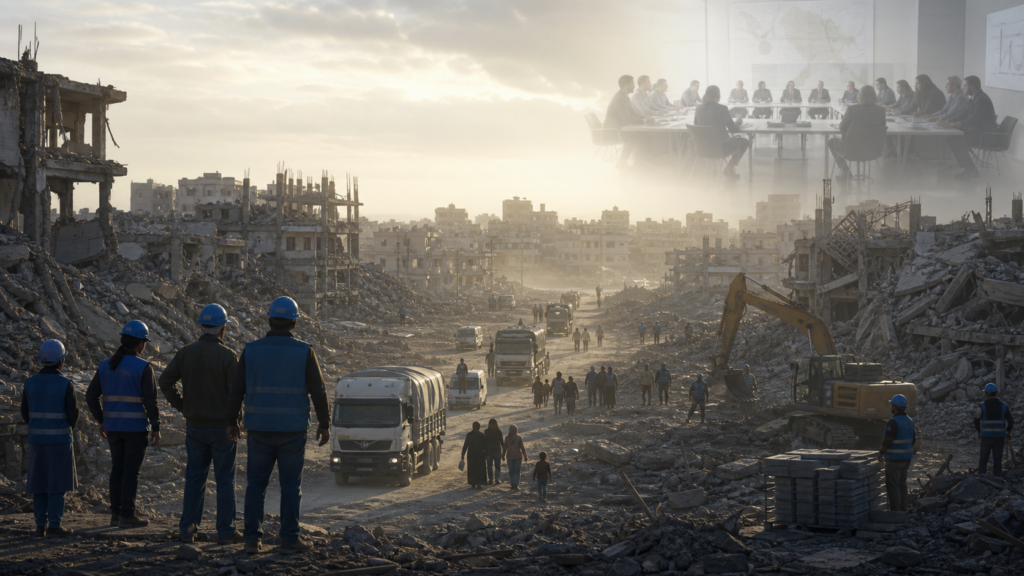
A political handover
Hamas said it dissolved its government in Gaza and is preparing to transfer power to a UN-backed technical committee under a U.S.-brokered ceasefire framework, AP reported. The move is significant because postwar governance has been one of the biggest obstacles to stabilizing Gaza.
The security gap
The central uncertainty is security. Administrative transfer does not automatically answer whether Hamas will disarm, whether an international force can operate, or who controls armed groups on the ground. Without that piece, reconstruction and civilian services remain exposed.
Regional stakes
For the region, Gaza’s governance model will affect Israel, Egypt, Gulf donors, U.S. diplomacy and wider militant networks. A working technocratic authority could reduce escalation risk; a contested authority could become another front in the regional crisis.
What to watch
The next indicators are control of border crossings, police functions, aid distribution and whether armed factions accept the committee’s decisions. Ceasefires are judged less by signatures than by who can enforce daily order.
| Question | Why it matters |
|---|---|
| Disarmament | Determines whether the ceasefire can hold |
| Aid control | Shapes civilian recovery |
| International oversight | Affects donor confidence and security |