The 5% question
NATO Secretary-General Mark Rutte is pushing allies for credible plans to meet a new defense spending benchmark, AP reported. The headline number matters politically, but the deeper question is whether budgets turn into usable output.
Factories as deterrence
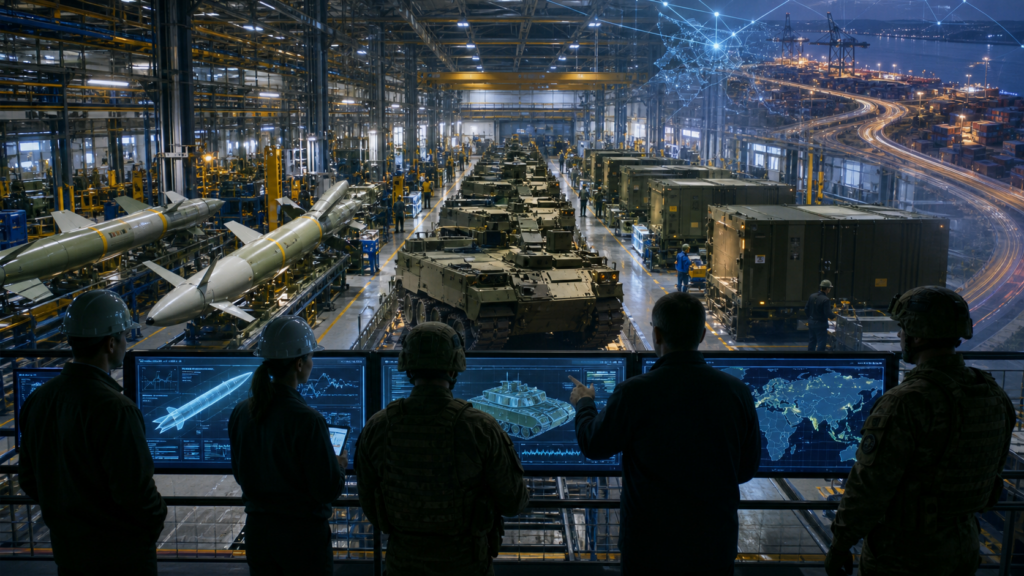
For Europe, deterrence now depends on factories as much as brigades. Interceptor missiles, artillery shells, drones, radars and electronic-warfare kits must be produced at a pace that can survive a long crisis. Empty stockpile targets do not stop missiles.
Infrastructure counts
The inclusion of infrastructure in the spending conversation is not accounting trivia. Ports, bridges, rail corridors and roads determine whether heavy units can move east quickly and whether supplies can keep flowing under pressure.
Ukraine's role
Ukraine is central to the industrial lesson. Its battlefield feedback can shorten design cycles, while European capital and standards can scale production. The alliance’s challenge is to connect those strengths before the next shock, not after it.
| Capability | Why production matters |
|---|---|
| Interceptors | Defend cities and bases during salvos |
| Drones | Scale reconnaissance and strike cycles |
| Infrastructure | Moves forces and supplies under pressure |