Autonomous Infantry: Phantom MK-1 Humanoid Robots Enter Battlefield Trials
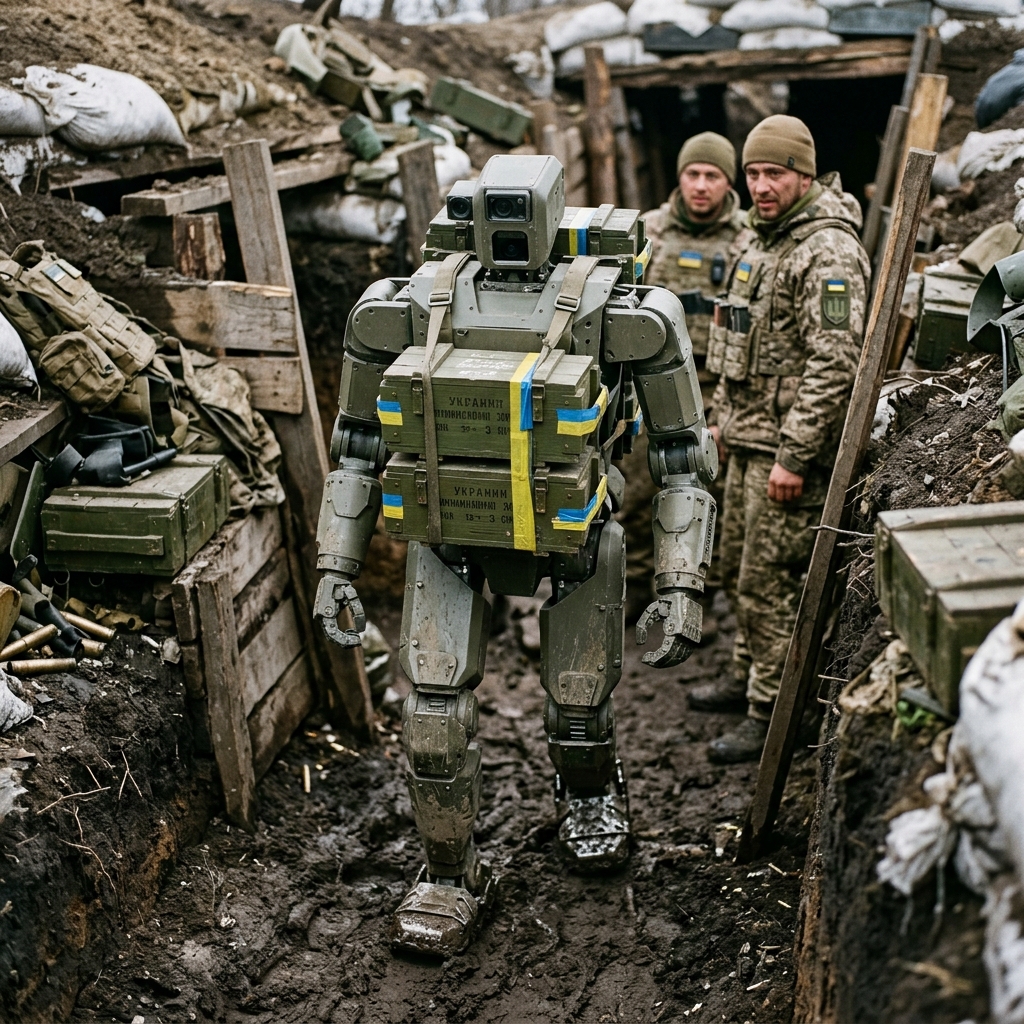
The integration of robotic assets on the modern battlefield has taken a paradigm-shifting leap. According to verified open-source intelligence (OSINT) reports and battlefield logistics trackers as of July 2026, the San Francisco-based defense technology startup Foundation Future Industries has deployed two operational prototypes of its next-generation humanoid robot, the Phantom MK-1, to the active frontline in Ukraine for combat-environment testing. This deployment marks the first documented instance of fully articulated bipedal humanoid platforms operating under real-world tactical and electronic warfare (EW) conditions, moving autonomous infantry from the realm of science fiction into operational reality. The Phantom MK-1 is a 5-foot-9-inch, 176-pound bipedal platform designed to simulate human movement and operate standard equipment. Priced at approximately $50,000 per unit, these machines are being tested primarily in high-threat scenarios, including mine clearance operations, logistics delivery in heavily shelled trench sectors, and forward reconnaissance. The robots are equipped with advanced sensor suites, including multi-spectral LiDAR and thermal imaging, allowing them to construct real-time 3D tactical maps of their surroundings. Driven by edge-computed artificial intelligence models, the robots can navigate complex ruins and trench networks autonomously, relying on optical guidance when active electronic warfare jamming disrupts GPS and standard satellite-based navigation channels.Tactical Implications and the Evolution of Autonomous Attrition
The battlefield trials in Ukraine have exposed both the immense strategic potential and the current limitations of bipedal military systems. Proponents of autonomous infantry point to the invaluable preservation of human life, particularly in the highly hazardous ‘last mile’ of tactical delivery and breach operations where casualties are traditionally high. By utilizing humanoids for ammunition transport and stretcher-bearing tasks, frontline units can maintain high operational efficiency while reducing exposure to hostile sniper and drone attacks. However, the deployment of bipedal platforms also faces severe engineering and tactical challenges. The rugged, mud-soaked terrain of the Ukrainian front, combined with winter freeze and deep trench mud, tests the structural durability of complex hydraulic and electric actuators in the robot’s limbs. Energy storage remains another major constraint; the Phantom MK-1’s high-capacity lithium-ion battery pack currently provides only 2 to 3 hours of continuous high-intensity operational runtime before requiring recharge. Furthermore, defense analysts highlight the massive cyber-security vulnerabilities of autonomous assets. If an opponent manages to intercept or spoof the control frequencies or compromise the localized AI model, the platform could be turned against friendly forces, necessitating the implementation of secure, decentralized, and zero-trust firmware architectures.| Platform Class | Unit Cost (Est.) | Operational Battery Life | Primary Tactical Advantages | Terrain Adaptability |
|---|---|---|---|---|
| Phantom MK-1 Humanoid | $50,000 | 2 – 3 Hours | Tool/weapon manipulation, obstacle navigation | Moderate (Struggles in deep mud) |
| Four-Legged Quadruped (Dog) | $15,000 | 3 – 4 Hours | Low-profile reconnaissance, rapid traversal | High (Excellent on sloped ground) |
| Tracked UGV (Ground Vehicle) | $35,000 | 6 – 8 Hours | Heavy payload bearing, kinetic weapons station | High (Excellent in ruins) |
| FPV Aerial Drone (Quadcopter) | $500 | 15 – 30 Minutes | Precision strike, vertical observation | Unlimited (Aerial domain) |
Ethical and Legal Frameworks
The deployment of autonomous humanoid robots introduces unprecedented ethical and legal challenges. International observers have raised concerns regarding the potential for autonomous target engagement, emphasizing the need for robust “human-in-the-loop” protocols. While the current Phantom MK-1 models are restricted to logistical and reconnaissance roles, the rapid advancement of combat AI models suggests that weaponized autonomous systems could soon become a reality, prompting urgent calls for updated Geneva Convention guidelines.
Future Prospects on the Frontline
Despite the current limitations in battery life and terrain adaptability, the successful integration of bipedal platforms signals a paradigm shift in modern warfare. Future iterations are expected to feature enhanced power density, swarm coordination capabilities, and advanced anti-jamming firmware. As defense contractors continue to refine these technologies based on real-world battlefield feedback, humanoid robots may transition from experimental novelties to standard-issue infantry support assets within the next decade.