A Coordinated Economic Assault
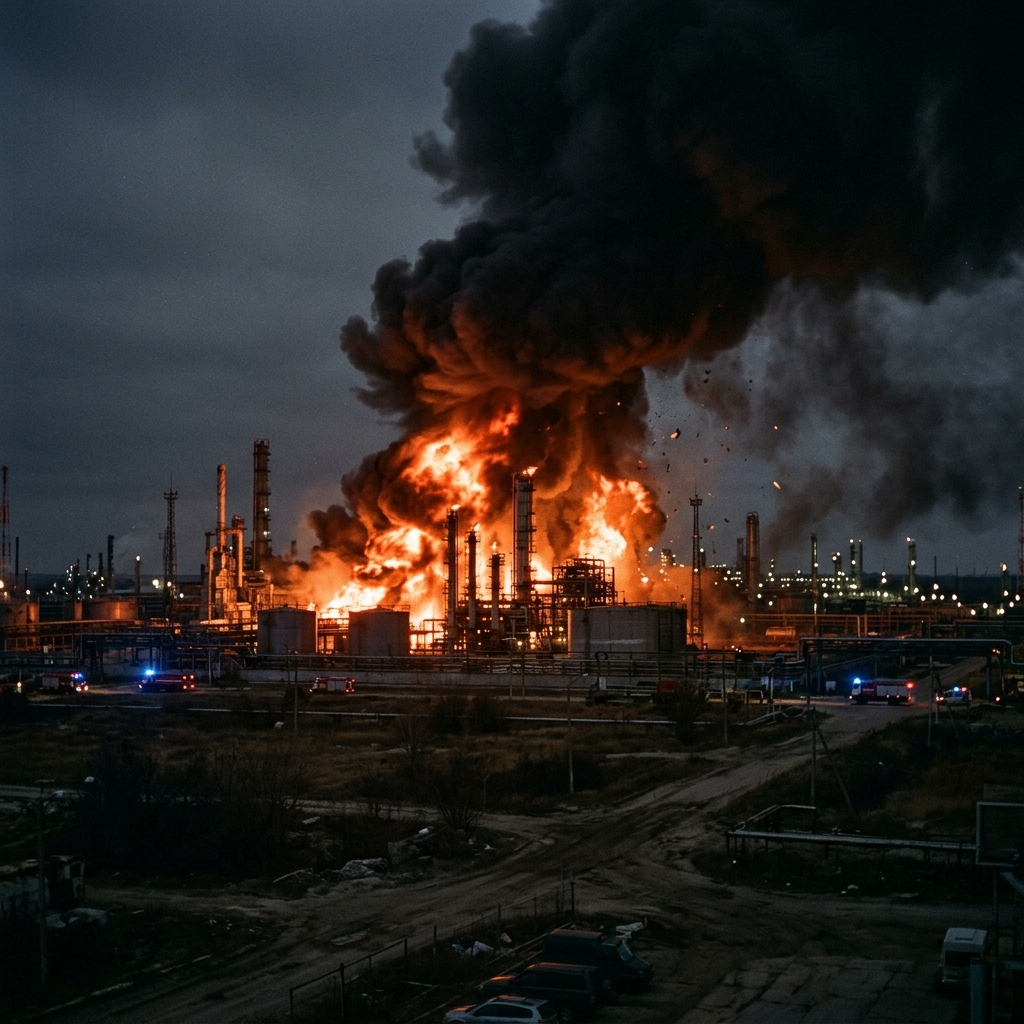
Over the past 72 hours, a series of long-range drone strikes has targeted multiple major oil refineries deep within Russian territory. Utilizing domestically produced, extended-range unmanned aerial vehicles (UAVs), Ukrainian forces have successfully bypassed heavily fortified air defense networks to strike critical processing infrastructure. Geolocation data and satellite imagery confirm severe damage to primary distillation units at facilities responsible for a significant percentage of Russia’s domestic gasoline and diesel output.
- Three major refineries spanning from the Volga region to the southern Urals were hit simultaneously.
- Fires burned for over 24 hours at two facilities due to the destruction of specialized firefighting equipment.
- The targeted plants account for an estimated 12% of Russia’s total crude oil refining capacity.
This systematic targeting represents a strategic shift from purely tactical military engagements to a broader economic warfare campaign.
The Ripple Effect on Domestic Markets
The immediate consequence of these strikes has been a sharp disruption in the domestic fuel supply chain. Wholesale prices for AI-95 gasoline on the St. Petersburg International Mercantile Exchange spiked by over 8% in a single day of trading, reaching near-record highs for the year. This sudden price surge is causing cascading effects across the Russian economy, particularly impacting the agricultural sector, which is heavily reliant on diesel fuel for the upcoming harvest season.
Export Bans and Revenue Loss
In an urgent attempt to stabilize the domestic market and prevent fuel shortages at the pump, the Russian government was forced to announce a temporary, sweeping ban on gasoline and diesel exports. While this move may temporarily ease domestic price pressures, it severely impacts Russia’s federal budget. The loss of refined petroleum export revenue deprives the Kremlin of crucial foreign currency needed to finance its ongoing military operations in Ukraine.
The Vulnerability of Specialized Equipment
Energy analysts point out that repairing the damaged refineries will be a protracted and incredibly expensive endeavor. The strikes deliberately targeted primary crude distillation units (CDUs) and catalytic cracking complexes. Much of this specialized, high-tech equipment was originally imported from Western manufacturers. Under current international sanctions, replacing these components is nearly impossible, forcing Russian engineers to rely on inferior domestic substitutes or lengthy, complex smuggling routes through third countries.
| Targeted Facility Region | Est. Capacity Lost (BPD) | Expected Downtime |
|---|---|---|
| Volga Region (Ryazan) | 150,000 | 3-5 Months (Primary CDU destroyed) |
| Southern Urals (Orsk) | 80,000 | 2-3 Months (Secondary cracking unit hit) |
| Rostov Oblast (Novoshakhtinsk) | 110,000 | 4 Weeks (Storage and piping damage) |
| Total Estimated Deficit | 340,000 Barrels/Day | Affects ~12% of national capacity |