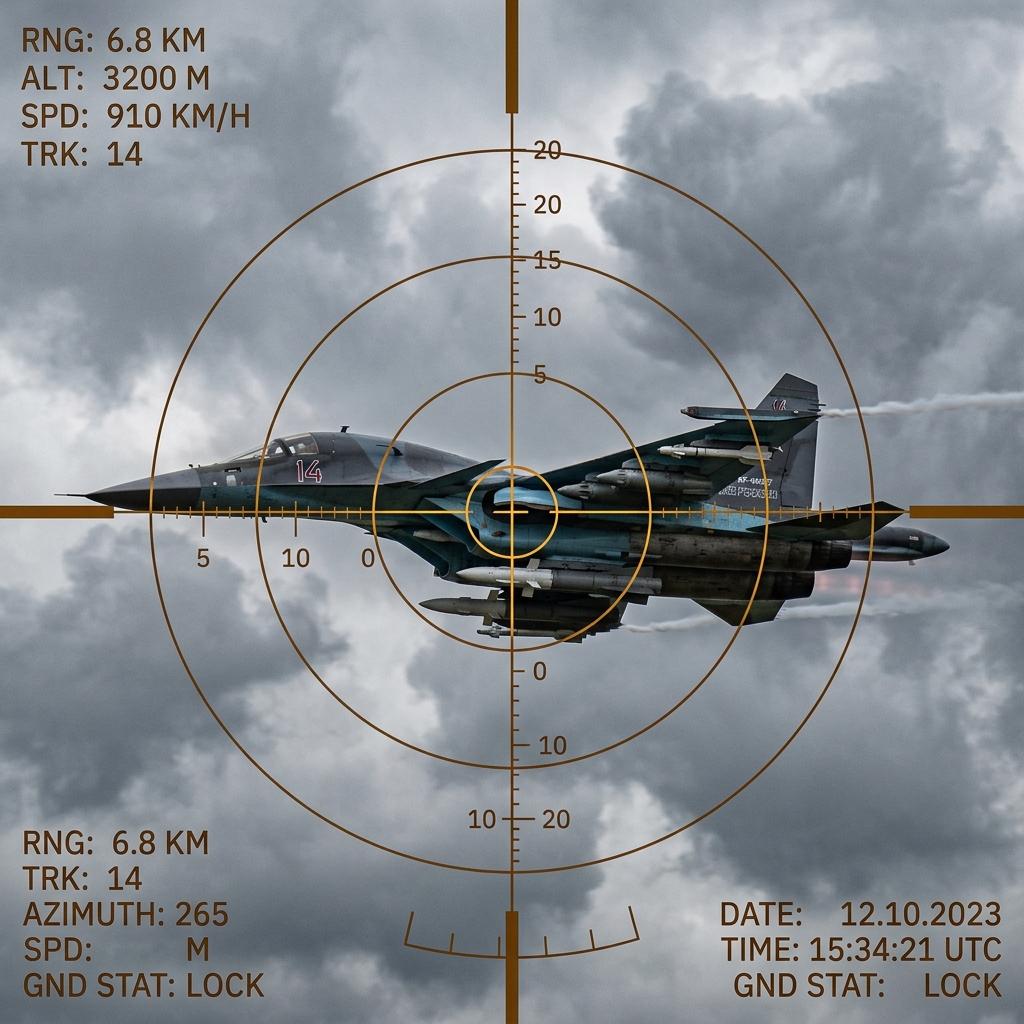
The "Black Week" for Russian Aviation
Over the past seven days, the Russian Aerospace Forces (VKS) have suffered unprecedented losses, marking what analysts are calling the “Black Week” for their tactical bomber fleet. A highly coordinated campaign utilizing both advanced Western air defense systems and new aviation assets has successfully created a deadly gauntlet for Russian Su-34 “Fullback” fighter-bombers attempting to conduct glide bomb strikes.
- Multiple confirmed downings of Su-34 aircraft in the southern and eastern sectors.
- A drastic reduction in the daily average of KAB (glide bomb) strikes by over 60%.
- The forced grounding of several bomber squadrons pending new tactical directives.
This dramatic shift highlights a new level of integration and reach within the Ukrainian air defense network, effectively pushing the engagement zone far beyond the immediate frontline.
The Mechanics of the Trap
The success of these interceptions relies on a sophisticated “roaming” air defense strategy combined with new stand-off capabilities. Russian Su-34s, which typically climb to high altitudes to extend the range of their heavy glide bombs, are now being targeted at the apex of their flight paths. By rapidly deploying mobile Patriot or SAMP/T systems to unexpected forward positions, and simultaneously leveraging the radar data from allied AWACS, the Ukrainian forces have managed to ambush the bombers before they can release their payloads.
Furthermore, the introduction of F-16 patrols equipped with AIM-120 AMRAAM missiles has forced Russian fighter escorts (such as the Su-35) to engage defensively, leaving the heavier, less maneuverable Su-34s exposed to ground-based interceptors.
Strategic and Logistical Impact on the VKS
The loss of multiple Su-34 airframes in such a short period is a significant blow to the VKS. The Su-34 is Russia’s primary workhorse for tactical precision strikes, and replacing both the advanced airframes and their highly trained two-man crews is a slow and costly process. Open-source intelligence indicates that the remaining squadrons are experiencing high fatigue rates and plummeting morale due to the suddenly hostile operational environment.
The Future of Glide Bomb Tactics
In response to these heavy losses, Russian command is expected to attempt a shift in tactics, potentially utilizing older, unguided munitions from lower altitudes, or relying more heavily on stand-off cruise missiles. However, both alternatives reduce their operational effectiveness and accuracy. The “Black Week” has proven that the asymmetric advantage once held by Russian aviation is rapidly eroding.
| Metric | Previous 30-Day Average | Current "Black Week" Data |
|---|---|---|
| Daily KAB Strikes | 80 – 110 | 25 – 40 |
| Confirmed Su-34 Losses | 1 – 2 per month | Multiple in 7 days |
| Average Engagement Range | 20 – 40 km | 60 – 90+ km |
| Escort Effectiveness | High (Su-35 deterrence) | Low (Engaged by F-16s) |