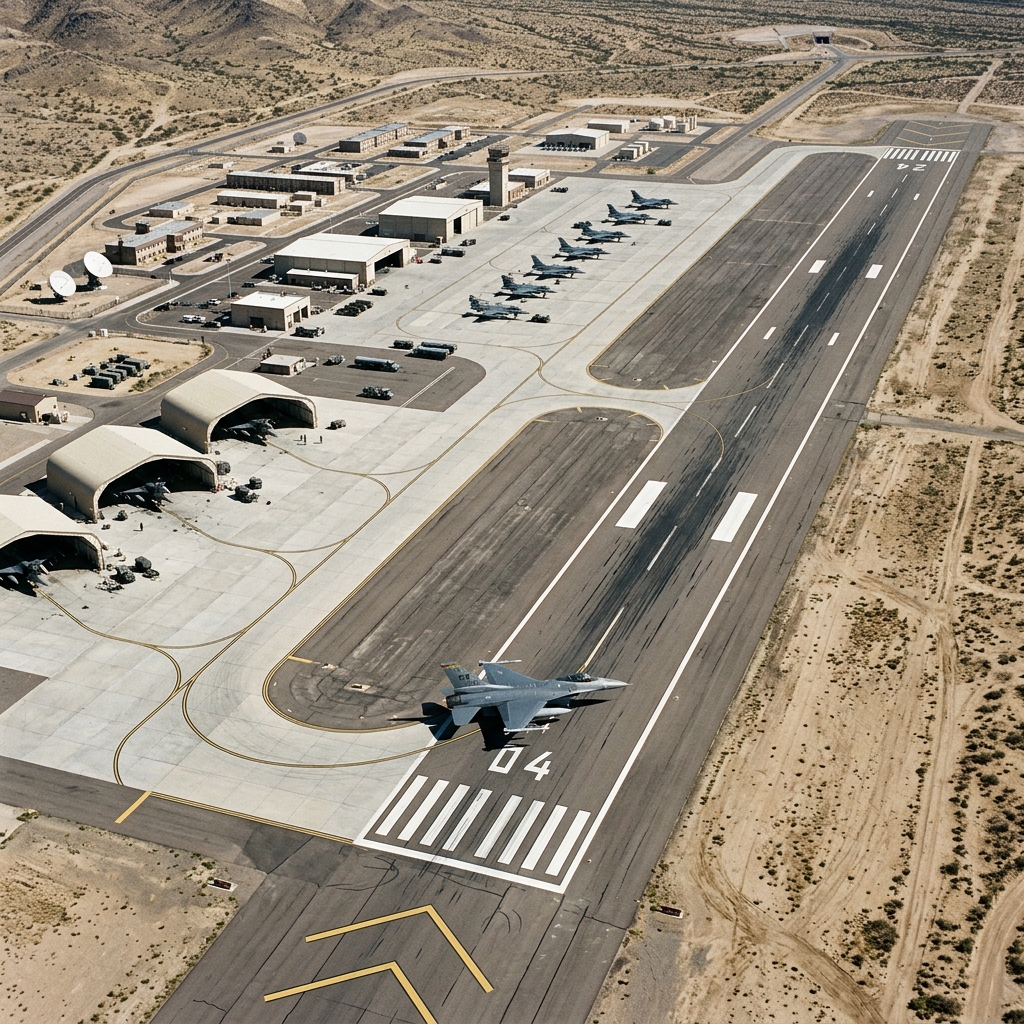
The Dawn of a New Aerial Era over Crimea
The strategic deployment of F-16 multirole fighter jets has fundamentally altered the balance of power in the airspace over the occupied Crimean peninsula. For the first time since the beginning of the full-scale conflict, Russian aviation is facing a systematic, technologically superior threat capable of pushing their tactical bombers back. Recent satellite imagery analysis reveals significant changes in the operational patterns of Russian Su-34 and Su-35 squadrons.
- Forced relocation of aviation assets from forward bases in Crimea to deep rear airfields.
- Decreased intensity of glide bomb (KAB) strikes along the southern frontline.
- Increased vulnerability of Russian ground-based air defense systems to coordinated SEAD (Suppression of Enemy Air Defenses) missions.
These developments indicate a critical shift: the airspace over the Black Sea is no longer a permissive environment for Russian operations.
Tactical Implications and Satellite Evidence
High-resolution satellite imagery captured over the past 72 hours shows empty revetments at the Belbek and Saky air bases. The mass exodus of Russian tactical aviation correlates perfectly with the first confirmed operational flights of F-16s equipped with AIM-120 AMRAAM air-to-air missiles. This stand-off capability allows the new fighters to engage Russian aircraft long before they can release their payloads.
Furthermore, radar emissions tracked by allied AWACS and open-source intelligence confirm that Russian air patrols have been forced to operate significantly further from the coast, severely limiting their operational effectiveness and loiter time.
The Destruction of Ground Defenses
The arrival of the F-16s has also synergized with long-range strike capabilities. By utilizing the HARM (High-speed Anti-Radiation Missile) targeting systems integrated into the jets, Ukrainian forces have methodically dismantled the overlapping S-300 and S-400 radar networks that previously protected the peninsula. This degradation of the radar envelope has created corridors for subsequent drone and cruise missile strikes against logistical hubs and naval facilities.
Future Outlook for Black Sea Operations
With the Russian aerospace forces adopting a defensive posture, the window of opportunity for further strategic operations has widened. Intelligence analysts predict that the continued presence of F-16 patrols will significantly reduce the threat to coastal infrastructure and civilian shipping lanes. The next phase of operations is expected to focus on maintaining air superiority and preventing any Russian attempts to re-establish a foothold over the western Black Sea.
| Parameter | F-16AM/BM (Upgraded) | Russian Su-34/Su-35S |
|---|---|---|
| Primary Role | Multirole / SEAD / Air Superiority | Strike / Air Superiority |
| Key Armament | AIM-120 AMRAAM, AGM-88 HARM | R-77, R-37M, KABs |
| Radar Signature | Medium-Low | High |
| Current Operational Posture | Offensive / Interdiction | Defensive / Relocating |