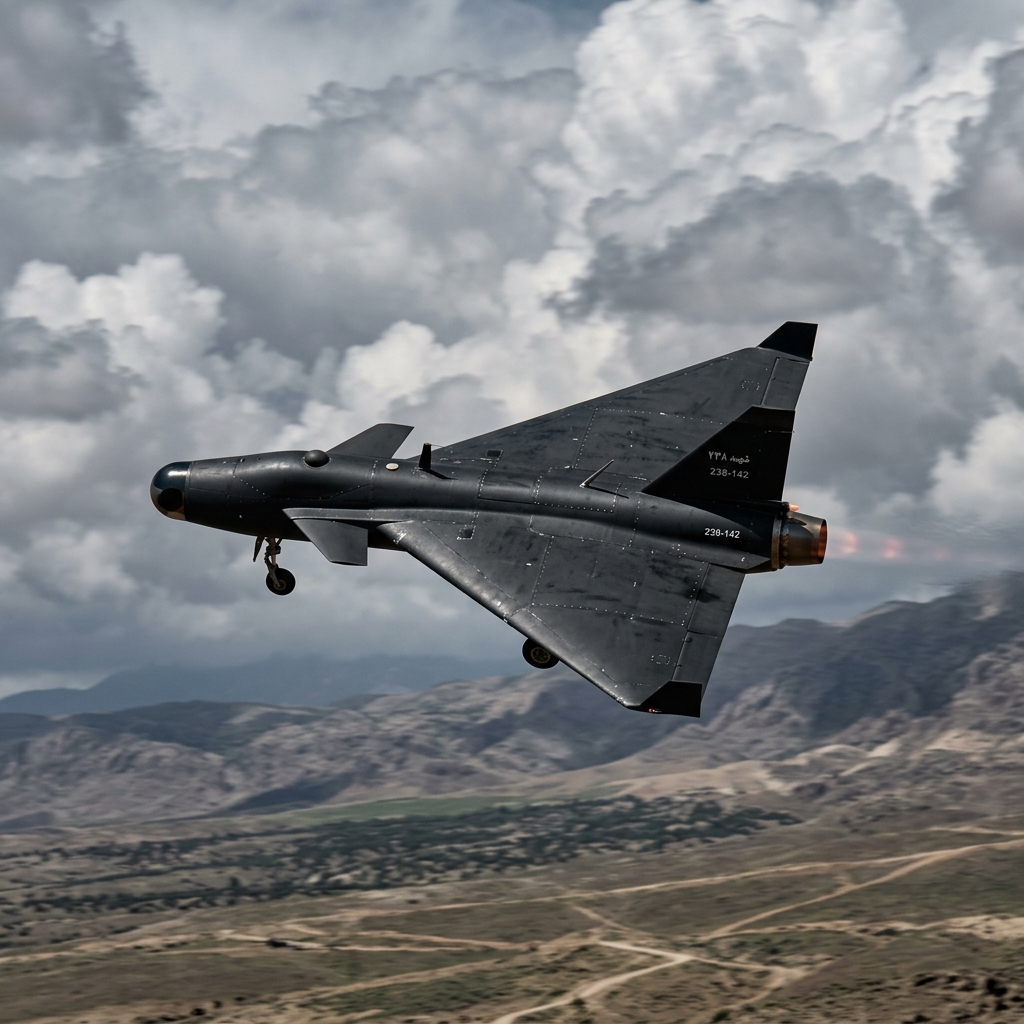
Evolution of the Shahed
The Shahed-238 represents a significant evolution of the Iranian-designed kamikaze drones heavily utilized by Russian forces in Ukraine. Unlike the conventional propeller-driven Shahed-136, the 238 variant is equipped with a small turbojet engine, allowing it to reach speeds of up to 600 km/h. This drastic increase in speed reduces the reaction window for Ukrainian air defenses and mobile fire groups.
New Capabilities and Guidance
In addition to its jet propulsion, the Shahed-238 comes with various seeker options, including anti-radiation sensors designed to lock onto air defense radars, and electro-optical guidance systems. The drone’s modified airframe and matte black finish may also serve to marginally reduce its visual and thermal signature at night, complicating interception efforts.
Ukrainian Countermeasures
To counter this high-speed threat, Ukraine has begun deploying agile interceptor quadcopters designed to pursue and crash into incoming drones. Combined with layered electronic warfare and integrated radar networks, these novel defensive tactics aim to neutralize the jet-powered Shaheds before they can strike critical civilian and energy infrastructure.
Future Deployments
Russia aims to increase the proportion of jet-powered kamikaze drones in its strikes to overcome conventional anti-aircraft fire. This shift forces continuous adaptation in defensive strategies, underscoring the rapid technological evolution seen on the modern battlefield.
| Feature | Shahed-238 | Shahed-136 |
|---|---|---|
| Engine Type | Turbojet | Piston Engine |
| Top Speed | ~600 km/h | ~200 km/h |
| Primary Threat | Reduced interception time | Mass swarm tactics |