Strategic Overview of the Interception
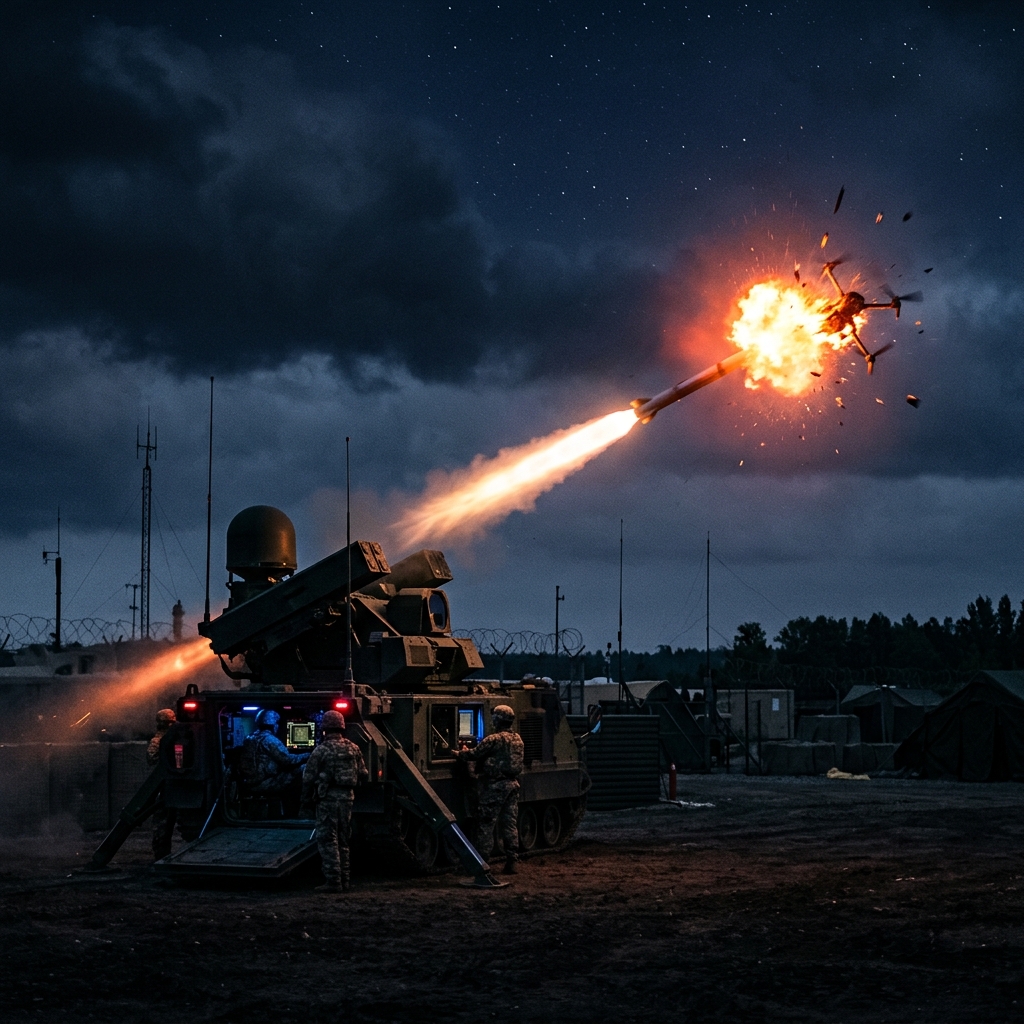
In a significant escalation of aerial hostilities, advanced air defense systems successfully intercepted a massive swarm of hostile drones targeting critical infrastructure and civilian centers. The coordinated attack, which unfolded under the cover of darkness, was swiftly thwarted.
Technological Edge and Operational Tactics
The core of the defensive strategy relied on the seamless integration of early-warning radar systems with automated fire-control mechanisms. These advanced systems are capable of tracking multiple high-speed targets simultaneously, calculating interception trajectories in milliseconds.
Deployment of Mobile Interceptors
The deployment of highly mobile interceptor units also played a crucial role, allowing commanders to dynamically reposition defenses based on evolving threat vectors. This tactical flexibility is paramount when dealing with unpredictable drone swarms.
Implications for Future Defense Strategies
The successful interception of this large-scale drone attack serves as a vital case study for military planners and strategists worldwide. It reinforces the necessity of continuous investment in multi-layered air defense systems capable of adapting to fluid tactical scenarios.
| System Component | Role | Effectiveness |
|---|---|---|
| Early-Warning Radar | Threat detection and tracking | High |
| Kinetic Interceptors | Physical destruction of targets | Very High |
| Electronic Warfare | Disruption of drone navigation | Moderate to High |
| Mobile Units | Dynamic repositioning | High |