Strategic Overview of the Operation
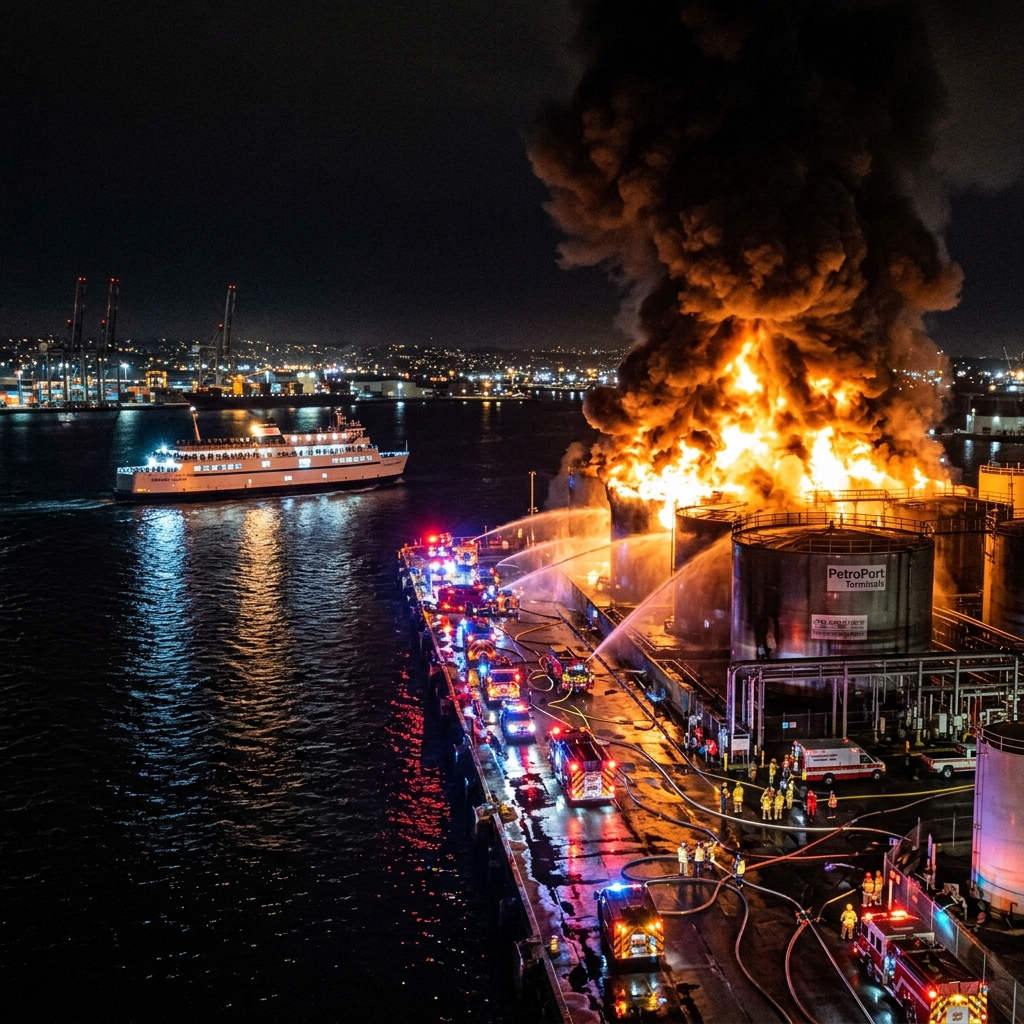
A significant multi-domain strike has severely compromised Russian logistics and fuel infrastructure in the Kerch Strait region. The coordinated attack targeted critical logistical nodes: the ferry crossings near Port Kavkaz in the Krasnodar Krai and a major oil terminal in Kerch, located in close proximity to the Crimean Bridge. This operation marks a profound shift in the targeting strategy, aiming to simultaneously cripple the maritime transport of heavy armor and the immediate fuel supply lines necessary for Russian military operations in occupied Crimea and southern Ukraine. Port Kavkaz is a vital artery for the Russian military, handling roll-on/roll-off ferries capable of transporting trains and heavy military equipment that cannot be easily moved across the heavily guarded and previously damaged Crimean Bridge. Concurrently, the strike on the Kerch oil terminal creates an immediate bottleneck for refined fuel products. This terminal is essential for fueling both the Black Sea Fleet remnants and the land forces stationed on the peninsula. The dual-strike methodology indicates a high level of intelligence coordination and the successful penetration of Russia’s dense layered air defense systems protecting the Kerch Strait. By hitting both the transport mechanism (ferries) and the resources (fuel), the operation achieves a compounding logistical effect, severely degrading the operational capability of the Russian Southern Military District.
Penetrating Russian Air Defenses
The success of the strikes against Port Kavkaz and Kerch highlights significant vulnerabilities in Russia’s integrated air defense system (IADS) around the Kerch Strait, arguably one of the most heavily defended airspaces in the world. The Russian military has deployed a dense concentration of S-300, S-400, and Pantsir-S1 systems to protect the Crimean Bridge and its surrounding infrastructure. To bypass this formidable shield, the attack likely utilized a combination of complex tactics. It is highly probable that the strike involved a swarm of long-range one-way attack unmanned aerial vehicles (UAVs) to saturate and distract the radar systems, followed by low-altitude precision-guided munitions or anti-ship missiles adapted for land attack. The timing of the strikes, likely coordinated to exploit radar blind spots or shift changes, demonstrates advanced operational planning. Furthermore, the use of electronic warfare (EW) to jam and spoof Russian tracking radars would have been essential in creating a corridor for the strike package. The inability of the Russian IADS to intercept the incoming threats before they reached both the ferries and the oil terminal indicates either a depletion of interceptor missiles, a failure in radar integration, or the successful employment of stealth and low-observable technologies by the attacking forces.
| Target | Strategic Impact | Estimated Damage Level |
|---|---|---|
| Port Kavkaz Ferries | Disrupts heavy armor & train transport to Crimea | Critical/Severe |
| Kerch Oil Terminal | Creates immediate fuel shortage for Southern Grouping | Catastrophic (Fire) |
| Russian Air Defense | Exposes vulnerabilities & forces relocation of assets | High Tactical Defeat |
Impact on Southern Front Logistics
The destruction of ferry capacity at Port Kavkaz combined with the loss of fuel reserves in Kerch creates a synergistic logistical crisis for the Russian armed forces. The Crimean Bridge, while still operational for light traffic, has strict weight limits for rail and road following previous structural damage. Therefore, large-scale movements of main battle tanks, artillery systems, and massive ammunition shipments relied heavily on the specialized railway ferries operating from Port Kavkaz. With these ferries out of commission or severely damaged, Russia faces a massive bottleneck in reinforcing its troops in the Zaporizhzhia and Kherson regions. The burning oil terminal exacerbates this issue. Modern mechanized warfare consumes staggering amounts of diesel and aviation fuel. The loss of a primary regional fuel hub means that even if equipment could be transported, fueling it for combat operations becomes a monumental challenge. Russian logisticians will be forced to rely on longer, more vulnerable overland routes through occupied southern Ukraine—routes that are constantly monitored and frequently interdicted by partisan activity and long-range artillery. This logistical strangulation is expected to lead to a noticeable decrease in the operational tempo of Russian forces, limiting their ability to conduct large-scale offensives and reducing their defensive resilience against sustained pressure.
Geopolitical and Tactical Ramifications
Beyond the immediate military implications, the strikes on Port Kavkaz and Kerch carry significant geopolitical weight. They serve as a powerful demonstration that no piece of Russian infrastructure, even within the internationally recognized borders of the Russian Federation (Krasnodar Krai) or the heavily fortified occupied territories (Crimea), is safe from precision strikes. This reality forces the Russian command to continually stretch their already depleted air defense assets, pulling them away from the frontline to protect rear-echelon logistical hubs. The psychological impact on Russian personnel operating in these supposed ‘safe zones’ is also profound, degrading morale and operational efficiency. Internationally, the successful execution of such complex, multi-domain strikes reinforces the narrative of increasing capability and strategic initiative on the part of the attacking forces. It validates the continued provision of advanced Western long-range weaponry and intelligence support, demonstrating a high return on investment in degrading the Russian war machine. Looking ahead, we can expect to see an intensified focus on interdicting the remaining logistical lifelines into Crimea, essentially turning the peninsula into a logistical trap rather than a secure rear base for the Russian military.