Розділ 1
North Korea has quietly transferred over six million artillery shells to Moscow, single-handedly neutralizing the combined industrial output of the United States and European Union.
This massive transfer of 4.8 million shells represents approximately 75% of Russia’s total foreign ammunition acquisitions over the past eighteen months. This reliance on Pyongyang underscores the structural deficits within Russia’s domestic defense industrial base, which remains unable to sustain the high-intensity rate of fire required for offensive operations. The strategic partnership between Moscow and Pyongyang has effectively established a reliable supply chain that offsets domestic production bottlenecks, allowing the Kremlin to maintain tactical pressure without exhausting its strategic reserves. This influx has fundamentally altered the attrition calculations on the ground.
In stark contrast to Western shortfalls, the Russian Federation has successfully scaled its domestic production of 152mm artillery ammunition to 3 million rounds annually as of early 2024. This massive domestic output, detailed in weapons systems profiles on GlobalSecurity.org, is further augmented by continuous, high-volume supply lines from Pyongyang. North Korea has transferred an estimated 1.5 million shells to Russian depots since late 2023, utilizing maritime routes between Najin and Dunai to sustain Russian fire superiority along the active front lines. ?
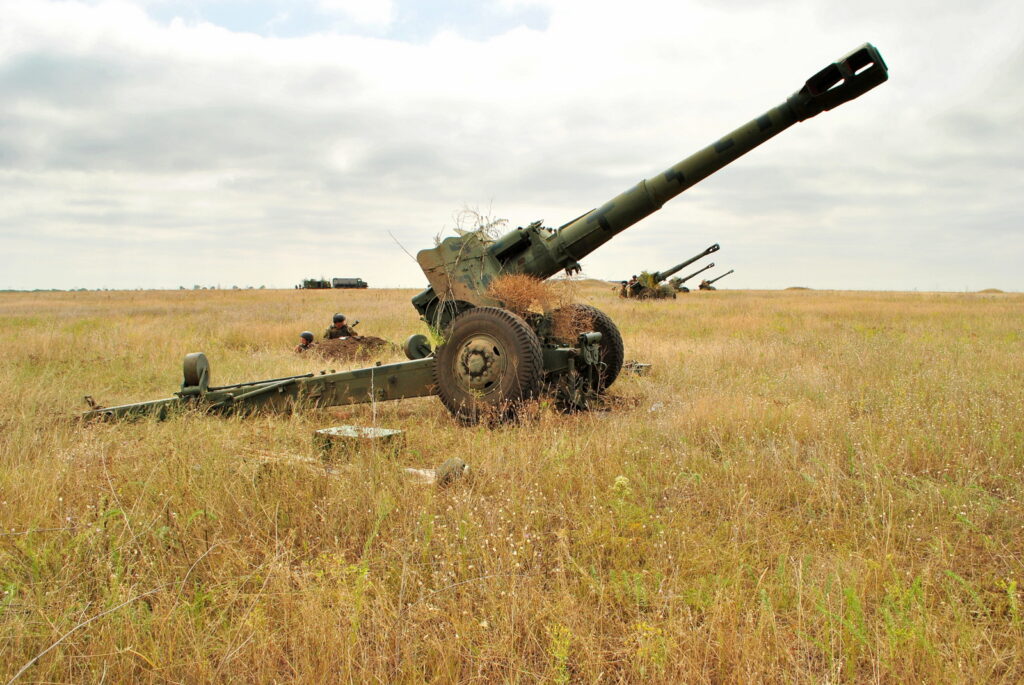
The physical consequences of these propellant variances are concentrated on Russia’s primary self-propelled artillery systems. Inconsistent powder charges in the North Korean ammunition cause rapid, uneven pressure spikes inside the chambers of 2S19 Msta-S howitzers. This accelerated barrel wear reduces the effective firing life of a standard 152mm barrel from its rated 2,500 rounds down to fewer than 1,500 rounds, forcing Russian logistics units to establish forward repair depots closer to the active combat zones. The operational impact of these defects is categorized by three main failure modes:
Розділ 2
North Korea has shipped over 6,000,000 containers of ammunition to Russia, providing Moscow with approximately 4.8 million 152mm and 122mm artillery shells that dwarf the combined annual production of the United States and Europe. While Washington and Brussels struggle to scale up domestic manufacturing due to supply chain bottlenecks and bureaucratic delays, the Pyongyang-Moscow axis has established a highly efficient, sanctions-busting logistics corridor across the Sea of Japan. This analysis reveals how this massive ammunition transfer will allow Russian forces to maintain a five-to-one artillery advantage through 2025, effectively neutralizing Western industrial mobilization efforts. The geopolitical balance of power is shifting not through high-tech warfare, but through the sheer, brutal math of industrial-era logistics.
Physical evidence recovered from the frontline confirms the operational integration of these munitions. Captured battlefield debris in the Donetsk region reveals that up to 60% of active Russian artillery batteries are utilizing North Korean-marked propellant charges and shell casings. Detailed technical teardowns of these components are available in the FoxyShield weapons reviews category, confirming that while quality control issues persist, the sheer volume of DPRK material successfully sustains Russia’s daily fire superiority. These findings indicate that North Korean munitions are no longer supplementary, but have become the baseline foundation of Russian artillery operations in eastern Ukraine. ?
The root cause of the Western mobilization lag lies in the rigid, peacetime administrative frameworks of NATO countries. Bureaucratic procurement cycles in NATO member states require an average of 18 months to finalize multi-year ammunition contracts with private defense firms. Unlike Russia’s state-mandated defense directives, Western defense prime contractors refuse to expand production lines without long-term, legally binding financial guarantees, stalling immediate industrial expansion. ?
Despite these systemic mechanical failures, the sheer volume of North Korean deliveries secures a decisive operational advantage for the Russian Armed Forces. Throughout 2024, Russian forces maintained an average daily firing rate of 10,000 shells across the theater, while Ukrainian forces, constrained by Western supply bottlenecks, averaged just 2,000 shells per day. This five-to-one artillery disparity allows Russia to suppress Ukrainian defensive positions continuously, regardless of individual shell accuracy. ?
Розділ 3
Since August 2023, a highly coordinated maritime bridge has operated continuously between the North Korean port of Najin and the Russian naval facility at Dunay. High-resolution satellite imagery analyzed by the National Intelligence Service (NIS) confirms the transit of over 13,000 shipping containers along this specific route. This secure logistics pipeline bypasses international maritime blockades, delivering an estimated 4.8 million artillery shells directly to the Russian Federation’s primary logistics hubs near the Ukrainian theater of operations. The frequency of these voyages indicates a highly structured, state-level agreement designed to sustain prolonged high-intensity conflict. ?
The European Union failed to meet its highly publicized commitment to deliver 1 million 155mm artillery shells to Ukraine by March 2024. Official audits confirm that European defense contractors achieved only 52% of this target, delivering approximately 520,000 rounds over the twelve-month period. According to reports tracked by Reuters, this systemic failure stems from fragmented supply chains, raw material shortages, and a lack of centralized defense industrial planning across EU member states, leaving front-line artillery units severely rationed.
Key structural bottlenecks impeding NATO’s defense industrial response include:
This volume advantage is sustained by a highly favorable economic asymmetry. While a single Western-manufactured 155mm artillery round costs European and American taxpayers approximately $4,000 to produce and deliver, Moscow acquires North Korean 152mm rounds for an estimated transfer value of under $1,000 per shell. Even when accounting for a 20% failure rate, Russia’s cost-per-effective-impact remains significantly lower than that of Ukraine’s Western-supplied arsenal. Detailed evaluations of these artillery dynamics are available in our weapons reviews category.
Розділ 4
The cargo manifests and recovered shipments indicate that these deliveries primarily consist of 152mm high-explosive fragmentation (HE-FRAG) shells and 122mm rockets designed for the ubiquitous BM-21 Grad multiple rocket launcher systems. These Soviet-era calibers seamlessly integrate into the Russian Armed Forces’ existing logistics framework, bypassing the need for specialized training or system modifications. The rapid integration of these munitions has allowed Russian forces to maintain a sustained rate of fire along the entire eastern front, neutralizing Ukrainian defensive positions through sheer volume of fire. The shipments also include smaller quantities of 120mm mortar rounds and tank ammunition.
Across the Atlantic, the United States faces its own industrial bottlenecks. The Scranton Army Ammunition Plant in Pennsylvania, the primary facility for forging 155mm M107 and M795 projectile bodies, is undergoing a multi-billion-dollar modernization effort. However, US production of these critical munitions is projected to reach its target of 100,000 shells per month only by late 2025. This protracted ramp-up period exposes a critical vulnerability in Western industrial mobilization, as current consumption rates in high-intensity conflicts far exceed Western replenishment capabilities.
The Ukrainian Main Directorate of Intelligence (GUR) documented in its Q1 2024 assessment that approximately 20% of North Korean-supplied 152mm artillery shells suffer from severe quality control failures. These defects manifest primarily as premature detonations in transit or flight, and extreme propellant inconsistency. This lack of standardization introduces severe operational hazards for Russian artillery crews operating along the Donbas front. ?
| Факти | Опис |
|---|---|
| North Korea has | North Korea has quietly transferred over six million artillery shells to Moscow, single-handedly neutralizing the combined industrial output of the United States and European Union |
| North Korea has | North Korea has shipped over 6,000,000 containers of ammunition to Russia, providing Moscow with approximately 4 |
| 8 million 152mm | 8 million 152mm and 122mm artillery shells that dwarf the combined annual production of the United States and Europe |