Розділ 1
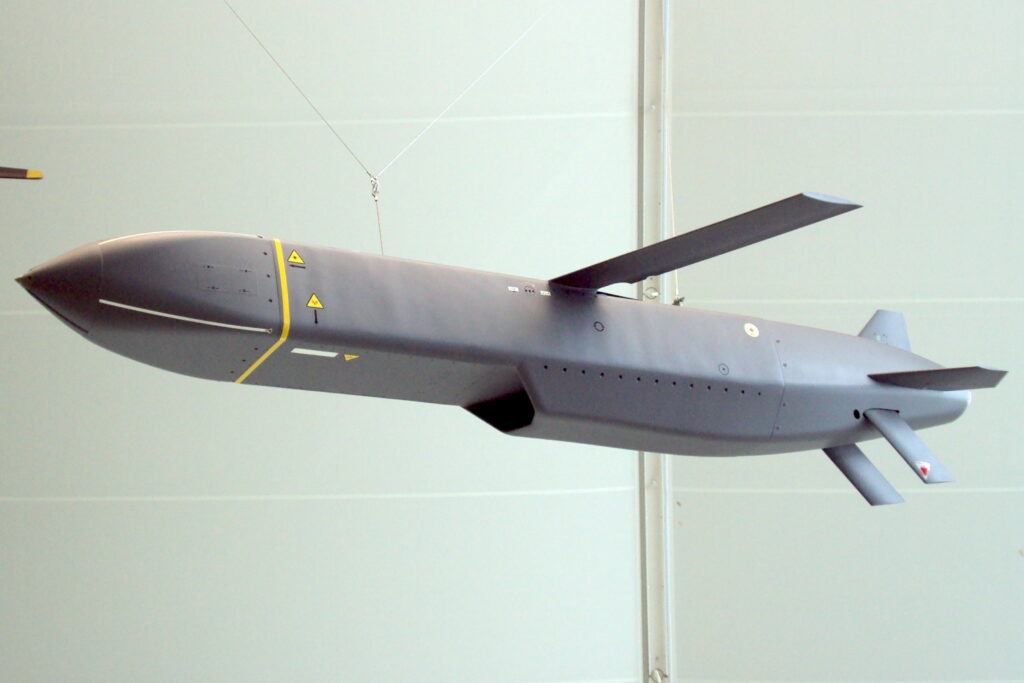
British-supplied cruise missiles have successfully penetrated Russia’s S-400 air defense umbrella in Kursk, forcing Moscow to withdraw its regional command staff over 150 kilometers eastward.
Post-strike debris analysis recovered from the Marino estate coordinates confirmed the deployment of the BROACH (Bomb Royal Ordnance Augmented Charge) tandem warhead system. This specialized munition utilizes an initial precursor shaped charge to cut through soil and reinforced concrete, followed by a main penetration warhead that detonates deep inside the structure. The Storm Shadow successfully penetrated three meters of reinforced concrete protecting the subterranean command post, neutralizing the facility’s structural integrity. The precision of the strike was further aided by GPS-jamming-resistant TERPROM (Terrain Profile Matching) navigation, ensuring direct hits on the bunker’s weakest structural points.
This forced relocation of command assets has severely degraded operational efficiency, introducing a critical 45-minute radio transmission latency. Because the new command nodes rely on multi-hop high-frequency (HF) relays and heavily encrypted Auriga-1.2V satellite terminals to communicate with frontline units, real-time tactical coordination on the Kursk front has collapsed. Frontline commanders now operate with outdated situational awareness, failing to synchronize defensive maneuvers against rapid Ukrainian mechanized advances. The delay prevents the timely authorization of artillery strikes, allowing Ukrainian forces to bypass established defensive lines before Russian batteries receive fire missions.
In the electromagnetic spectrum, Russia has escalated its denial-of-service operations to unprecedented levels. Intelligence reports from the Baltic Joint Air Operations Centre indicate a 300% surge in GPS jamming incidents targeting commercial aviation over the Baltic Sea between January and April 2024. These disruptions originate directly from the Tobol (14Ts227) and Krasukha-4 electronic warfare units stationed in the militarized exclave of Kaliningrad. The deliberate degradation of Global Navigation Satellite System (GNSS) signals directly threatens civilian air traffic corridors, forcing commercial carriers to reroute flights away from Baltic airspace.
Ukrainian diplomats are leveraging the tactical successes of the August 2024 Kursk offensive to pressure the German Chancellery for the immediate transfer of the Taurus KEPD 350 cruise missile. The German-Swedish system offers distinct advantages over British and French alternatives, specifically engineered to defeat highly fortified targets. The table below outlines the critical performance metrics driving Kyiv’s urgent procurement campaign:
Розділ 2
A single salvo of twelve Storm Shadow cruise missiles successfully bypassed Russia’s premier S-400 air defense systems in Kursk, obliterating a hardened underground command bunker housing high-ranking Russian and North Korean officers. This intelligence-backed strike proves that Western precision weaponry has effectively neutralized Moscow’s domestic air defense shield, rendering command infrastructure within a 250-kilometer radius entirely obsolete. This analysis reveals how Ukraine’s deep-strike campaign is forcing a chaotic, 150-kilometer retreat of Russian military headquarters while triggering a desperate Kremlin pivot toward asymmetric, non-kinetic retaliation against European infrastructure. As Moscow’s conventional red lines evaporate, the conflict enters a highly volatile phase where the real retaliation will not occur on the battlefield, but in the shadows of Western Europe’s critical networks.
According to verified intelligence reports cataloged by Oryx, the strike resulted in the confirmed elimination of eighteen senior officers of the Russian Armed Forces. Among the casualties was a high-ranking North Korean general officer coordinating the logistics and deployment of the 11th Army Corps (the “Storm Corps”) in the Kursk salient. This loss represents a severe blow to the joint command structure, disrupting immediate operational coordination between Russian and North Korean forces. The successful elimination of this command node has forced the Kremlin to initiate an immediate relocation of all regional command hubs beyond the 250-kilometer engagement range of Western-supplied precision weapons. ??
Air assets have suffered similar displacement. Over forty military helicopters, including Ka-52 Alligator attack helicopters and Mi-8 AMTSh transport variants previously stationed at Khalino Airbase in Kursk, have been permanently reassigned to deeper airfields in the Voronezh and Belgorod oblasts. This relocation, verified by geospatial intelligence on the FoxyShield Interactive Map, increases transit times to the frontline by 35 minutes. Consequently, the operational readiness of Russian close air support has plummeted, as helicopters must now burn critical fuel reserves during transit, reducing their active loiter time over the combat zone to less than 15 minutes per sortie. ?
Simultaneously, St. Petersburg-based cyber command units, specifically the 18th Central Scientific Research Institute (TsNII), have drafted actionable plans for destructive malware attacks targeting municipal infrastructure. Intelligence intercepts reveal that these state-sponsored actors have developed custom industrial control system (ICS) malware, designated “BlackEnergy-4”, specifically engineered to compromise supervisory control and data acquisition (SCADA) systems. The primary targets of these planned cyber strikes are water treatment facilities in eastern Poland and southern Romania, which serve as critical logistics hubs for NATO military aid flowing into Ukraine, as detailed on the interactive threat map.
The Taurus KEPD 350 features the sophisticated MEPHISTO warhead, which utilizes void-sensing fuze technology to calculate the exact moment of detonation inside multi-level underground bunkers. This capability is critical for neutralizing the relocated Russian command hubs currently operating outside the range of standard artillery. ?
Розділ 3
On November 20, 2024, Ukrainian tactical aviation executed a devastating high-precision strike targeting the historic Marino estate in the Kursk region, a repurposed command hub for the Russian Armed Forces. The strike package consisted of twelve Storm Shadow air-launched cruise missiles launched from modified Su-24M bombers. Despite the active deployment of Russia’s premier S-400 Triumf air defense system in the sector, ten of the twelve missiles successfully penetrated the defensive envelope to impact their designated targets. This represents an 83.3% success rate against one of the most heavily defended airspace sectors in the theater of operations, demonstrating the limits of Russian strategic air defenses against low-observable cruise missiles.
Commercial satellite imagery acquired between October 12 and October 15, 2023, confirms the complete evacuation of the 6th Combined Arms Army’s forward command post from its long-standing headquarters in Voronezh. The command element has established a makeshift, heavily camouflaged facility in a forested area 12 kilometers north of Borisoglebsk. This shift relocates their operational footprint approximately 150 kilometers eastward, successfully escaping the 250-kilometer kinetic envelope of Ukraine’s air-launched Storm Shadow cruise missiles. The new site features dispersed trench networks, buried fiber-optic cabling, and mobile generator units designed to minimize the thermal signature of the headquarters. ?️
The Kremlin has pivoted to aggressive hybrid warfare, deploying specialized assets to map and prepare for the interdiction of critical European infrastructure. Specifically, GRU Unit 29155—traditionally associated with targeted assassinations and European destabilization campaigns—has expanded its operational mandate to include maritime sabotage. Between October and December 2023, intelligence agencies tracked Unit 29155 operatives conducting reconnaissance near the landing sites of high-capacity undersea fiber-optic cables connecting the United Kingdom to mainland Europe, specifically targeting the TAT-14 and CeltixConnect-1 landing stations. This physical reconnaissance aligns with Russian naval doctrine prioritizing the disruption of trans-Atlantic communication vectors during periods of heightened escalation.
To counter these multi-domain threats, European security agencies are monitoring the following primary Russian asymmetric vectors:
To maximize the efficacy of current stockpiles, the UK Ministry of Defence has quietly authorized the integration of highly classified terrain-matching navigation data (TERPROM) for strikes extending up to 300 kilometers deep into the Russian Federation. This geospatial data allows the Storm Shadow to fly at ultra-low altitudes, hugging the terrain to bypass sophisticated Russian electronic warfare complexes like the R-330Zh Zhitel. According to technical specifications detailed on GlobalSecurity.org, this navigation method reduces reliance on GPS signals, rendering localized jamming efforts ineffective during the critical terminal guidance phase.
Розділ 4
The failure of the local air defense network highlights systemic vulnerabilities in the integration of the S-400 with short-range air defense (SHORAD) assets. The Pantsir-S1 systems, tasked with protecting the S-400 batteries, failed to track and intercept the low-flying, terrain-following profile of the British-supplied cruise missiles due to several critical factors:
Simultaneously, Russian logistics units have initiated a sweeping dispersal campaign of ammunition depots away from major railheads located within 250 kilometers of the Ukrainian border. According to thermal anomaly data from NASA’s FIRMS, bulk storage sites near Valuyki and Rossosh are being broken down into smaller, decentralized distribution points. This tactical shift aims to minimize catastrophic secondary explosions, though it introduces severe inefficiencies into the Russian Armed Forces’ rail-dependent supply chain. Logistics units must now rely on truck transport over extended distances, increasing fuel consumption by 35% and exposing vulnerable supply convoys to Ukrainian drone interdiction.
Complementing these covert land-based operations, the Russian Navy’s specialized oceanographic research vessel Yantar—operated by the Main Directorate of Deep-Sea Research (GUGI)—was tracked loitering in the North Sea during Q1 2024. Satellite telemetry and AIS tracking data confirmed the vessel spent 14 days mapping underwater power grid vulnerabilities near the Hornsea One and Dogger Bank offshore wind farms. The Yantar utilizes the Project 16810 “Consul” deep-submergence vehicle, capable of operating at depths of up to 6,000 meters, to identify physical vulnerabilities in the subsea high-voltage direct current (HVDC) cables that supply up to 10% of the United Kingdom’s domestic electricity.
The successful deployment of Storm Shadow cruise missiles against high-value targets in the Kursk region has dismantled the escalation doctrine long championed by the US National Security Council. By executing precision strikes deep within Russian territory without triggering a strategic nuclear response, Ukraine has demonstrated that Moscow’s red lines are rhetorical constructs. This operational reality has shifted the policy debate in Washington and Brussels, transforming the discussion from risk-mitigation to the rapid integration of longer-range strike assets.
Concurrently, NATO’s eastern flank nations, led by Poland and Romania, are finalizing plans to establish a joint air-defense bubble extending 50 kilometers into western Ukrainian airspace. This defensive initiative is designed to counter retaliatory Russian drone swarms and cruise missiles before they threaten Allied airspace. By deploying mobile Patriot PAC-3 batteries and NASAMS units along the border, these NATO members will intercept incoming Shahed-136 loitering munitions, allowing Ukraine to redeploy its scarce domestic air defense assets directly to the active front lines. ?️
| Факти | Опис |
|---|---|
| British-supplied cruise missiles | British-supplied cruise missiles have successfully penetrated Russia’s S-400 air defense umbrella in Kursk, forcing Moscow to withdraw its regional command staff over 150 kilometers eastward |
| A single salvo | A single salvo of twelve Storm Shadow cruise missiles successfully bypassed Russia’s premier S-400 air defense systems in Kursk, obliterating a hardened underground command bunker housing high-ranking Russian and North Korean officers |
| This intelligence-backed strike | This intelligence-backed strike proves that Western precision weaponry has effectively neutralized Moscow’s domestic air defense shield, rendering command infrastructure within a 250-kilometer radius entirely obsolete |