Розділ 1
Declassified satellite intelligence reveals Russia has secretly doubled its minefield density in southern Ukraine, deploying up to five anti-tank mines per square meter to completely neutralize Western armor.
This dense, multi-layered obstacle belt forces Ukrainian combat engineers to operate under extreme tactical constraints. Ukrainian sappers from the 47th Mechanized Brigade must conduct breaching operations exclusively during the limited hours of darkness. To prevent detection by Russian thermal-imaging reconnaissance drones, such as the Zala and Orlan-10, these sappers are forced to work without active thermal optics or infrared illuminators, relying instead on physical prodding and low-signature non-magnetic tools. This painstaking manual clearance process reduces the speed of advance to less than 100 meters per night, leaving armored columns highly vulnerable to pre-registered Russian artillery strikes when daylight breaks. For a deeper analysis of the armored vehicles facing these threats, see our comprehensive weapons reviews.
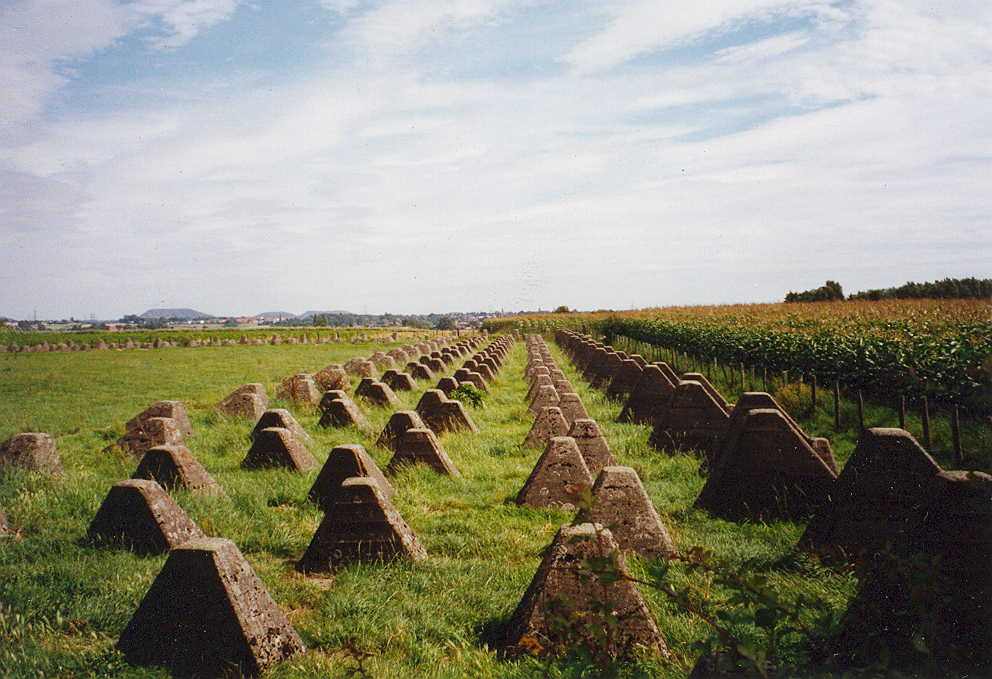
The geometric layout of the pyramids is deliberately offset to create artificial gaps. These gaps are not breaching points but highly engineered funneling channels. These channels guide Ukrainian armored columns directly into pre-registered kill zones calibrated for the 152mm 2S19 Msta-S self-propelled howitzers of the 58th Combined Arms Army. Any attempt to clear the obstacles using MICLIC (Mine Clearing Line Charge) systems triggers immediate, concentrated artillery barrages, halting the engineering effort within minutes.
This targeted attrition has forced a reliance on highly vulnerable, non-armored assets. The table below outlines the stark disparity between operational requirements and actual field deployment as of late 2023:
Once the lead engineering vehicles are disabled, the stalled Ukrainian armored columns at the first line of “dragon’s teeth” become static targets. Russian forward observers, utilizing Orlan-30 unmanned aerial vehicles (UAVs), paint these stationary targets with laser designators. This enables the Russian 58th Combined Arms Army to deploy Krasnopol-M2 laser-guided 152mm artillery shells with devastating accuracy. According to documented losses on Oryx, multiple Leopard 2A6 tanks and M2A2 Bradley infantry fighting vehicles have been abandoned or destroyed in these designated kill zones after losing mobility.
Розділ 2
New high-resolution radar satellite imagery confirms that Russian forces have quietly expanded the Surovikin Line in Zaporizhzhia, achieving an unprecedented density of 120,000 “dragon’s teeth” and over 500,000 TM-62 anti-tank mines. This analysis reveals how this impenetrable barrier will force Ukraine to abandon rapid mechanized maneuvers in favor of high-casualty, attritional infantry assaults. We predict that without a massive influx of specialized counter-mine engineering vehicles, any future Ukrainian push in this sector will stall within the first 500 meters, turning Western-supplied armor into static targets for Russian Ka-52 attack helicopters. The southern front is no longer a maneuver space; it is a highly engineered slaughterhouse.
During the initial phases of the Ukrainian counteroffensive in June 2023, Russian forces deployed free-standing concrete pyramids that Western-supplied engineering vehicles easily bypassed or displaced. However, satellite imagery analyzed by FoxyShield in October 2023 reveals a critical structural evolution in the Zaporizhzhia sector, specifically around the Robotyne-Verbove line. The updated defensive network features reinforced dragon’s teeth cast from high-density M400 concrete, reinforced internally with 16mm steel rebar, interconnected by 32mm high-tensile steel cables, and anchored directly to continuous, 2-meter-deep underground concrete foundation slabs.
The Ukrainian Armed Forces (UAF) face a catastrophic deficit in specialized engineering armor, severely limiting their ability to breach the dense Russian defensive networks in the Zaporizhzhia sector. Across the entire southern front, the UAF commands fewer than 30 active Wisent 1 mine-clearing tanks and Bergepanzer 3 Buffel armored recovery vehicles (ARVs) combined. This critical shortage prevents the simultaneous deployment of engineering assets across multiple axes of advance, forcing commanders to concentrate these high-value targets in predictable corridors. According to documented loss registries on Oryx, Russian forces prioritize the destruction of these specific platforms, further depleting the UAF’s operational inventory.
Deprived of mechanical breaching options, Ukrainian combat engineers from the 47th Mechanized Brigade must resort to manual demining methods under direct enemy fire. Sapper teams utilize non-metallic, improvised wooden probes to locate Russian TM-62M anti-tank mines and PMN-4 anti-personnel mines, as traditional metal detectors trigger advanced magnetic-influence fuses. Detailed technical specifications of these threat systems are documented by GlobalSecurity. This painstaking process slows the rate of advance to a crawl of just 100 meters per day in heavily contested sectors like Robotyne.
To prevent Ukrainian recovery teams from retrieving damaged armor, Russian forces have integrated permanent “hunter-killer” orbits of FPV (First-Person View) drones directly above the minefield choke points. Operated by specialized units like the BOBR (Quick Response Drone Battalion), these VT-40 and Gortenzia FPV drone wings maintain 24-hour surveillance and strike capabilities. They target the vulnerable top armor of stalled vehicles and disrupt infantry dismounts attempting to establish security perimeters. ?
Розділ 3
Russian engineering units have abandoned standard Soviet doctrine—which dictates a spacing of 4 to 5 meters between anti-tank mines—to deploy a lethal density of up to five TM-62M mines per square meter. By stacking these 9.5-kilogram mines directly on top of each other, Russian forces generate an explosive blast exceeding 37 kilograms of TNT equivalent. This catastrophic yield is specifically engineered to bypass the heavy underbelly armor of specialized Western breaching assets. The cumulative shockwave easily shears the steel plow arms of armored breaching vehicles. According to confirmed combat losses documented by Oryx, this tactical adaptation resulted in the rapid immobilization and destruction of multiple Leopard 2R heavy breaching vehicles during the initial phases of the southern counteroffensive in the Zaporizhzhia sector, rendering standard mechanical mine-clearing plows ineffective.
This monolithic design completely neutralizes the kinetic breaching tactics of heavy Western armor. Combat footage verified by military analysts in November 2023 confirms that a Challenger 2 main battle tank, weighing over 62 tonnes, cannot push through or topple these interconnected barriers. Attempting to climb the 1.2-meter-high pyramids forces the tank to tilt upward at an angle exceeding 30 degrees, exposing its highly vulnerable lower glacis plate and unarmored underbelly to direct anti-tank fire. According to independent loss tracking by Oryx, these structural traps have directly contributed to the immobilization of advanced Western armor in the southern theater.
Furthermore, Western allies have delivered only 15% of the requested M58 MICLIC (Mine Clearing Line Charge) systems required for continuous, high-tempo breaching operations. Without these rocket-projected explosive lines, which clear a path 100 meters long by 8 meters wide, Ukrainian forces cannot rapidly neutralize the dense minefields laid by the Russian 58th Combined Arms Army.
The operational consequences of this tactical bottleneck across the 80-kilometer Zaporizhzhia front are severe:
The absence of Western F-16 Fighting Falcons prevents the Ukrainian Air Force from establishing local air superiority, leaving ground forces highly vulnerable. Without medium-to-long-range air-to-air missiles like the AIM-120 AMRAAM to push back Russian tactical aviation, Ukrainian mobile air defense systems, such as the Gepard self-propelled anti-aircraft guns and Stormer HVM, are forced to operate dangerously close to the front lines. There, they are quickly targeted by Lancet-3 loitering munitions, leaving breaching operations entirely exposed to low-altitude Russian air strikes.
Розділ 4
Beyond static minefields, Russian forces have integrated dynamic, remote-delivered mining capabilities to seal breach lanes. High-resolution satellite imagery from Maxar Technologies has identified a new, 15-kilometer-deep secondary defensive belt situated immediately south of Robotyne. This belt is heavily seeded with POM-3 “Medalyon” landmines, which utilize sensitive seismic sensors to detect the footsteps of approaching infantry and eject a lethal fragmentation warhead at waist height. To maintain these barriers, Russian artillery units deploy the ISDM Zemledeliye remote mining system. Operating from a safe distance of 15 kilometers, a single 50-barrel Zemledeliye vehicle can blanket an area the size of several football fields with fresh mines within 10 minutes of a Ukrainian breach attempt, instantly neutralizing the progress of mine-clearing line charges (MICLICs) and trapping advancing columns.
The physical barrier does not exist in isolation; it operates as the structural anchor for an integrated defensive system. Russian combat engineers have positioned reinforced concrete bunkers housing Kornet-EM Anti-Tank Guided Missile (ATGM) systems at precise 400-meter intervals along the primary defensive line. These low-profile bunkers are camouflaged with local soil and vegetation, making them virtually invisible to the thermal optics of Ukrainian Leopard 2A6 tanks until the moment of weapon launch. This 400-meter spacing ensures overlapping fields of fire, meaning any vehicle attempting to clear the barrier is simultaneously targeted by at least two independent ATGM positions. Detailed technical breakdowns of these ATGM systems are available in our weapons reviews category.
Russian tactical doctrine exploits this bottleneck by deploying Lancet-3 kamikaze drones to systematically target Ukrainian mine-clearing rollers, such as the KMT-7, within the first ten minutes of any offensive operation. Operating under the guidance of Zala reconnaissance UAVs, these loitering munitions strike the vulnerable hydraulic linkages of plow systems, instantly neutralizing the breaching capability of leading Leopard 2R heavy breaching vehicles.
The Russian Aerospace Forces (VKS) have optimized their rotary-wing tactics by deploying modernized Ka-52M Alligator attack helicopters from forward operating locations at Berdyansk Airbase. Operating outside the engagement envelope of Ukrainian short-range air defense (SHORAD) systems, these platforms utilize the Product 305 (Light Multipurpose Guided Missile, or LMUR). The LMUR delivers a 25-kilogram high-explosive warhead with high precision over a range of 15 kilometers, allowing Russian pilots to systematically target Ukrainian engineering assets, such as the IMR-2 combat engineering vehicles and Leopard 2R heavy breaching vehicles, before they can clear paths through the minefields. Detailed technical breakdowns of these standoff capabilities are available in FoxyShield’s Weapons Reviews. ?
| Факти | Опис |
|---|---|
| Declassified satellite intelligence | Declassified satellite intelligence reveals Russia has secretly doubled its minefield density in southern Ukraine, deploying up to five anti-tank mines per square meter to completely neutralize Western armor |
| New high-resolution radar | New high-resolution radar satellite imagery confirms that Russian forces have quietly expanded the Surovikin Line in Zaporizhzhia, achieving an unprecedented density of 120,000 “dragon’s teeth” and over 500,000 TM-62 anti-tank mines |
| This analysis reveals | This analysis reveals how this impenetrable barrier will force Ukraine to abandon rapid mechanized maneuvers in favor of high-casualty, attritional infantry assaults |